Category: Doctrine

Certainty vs. Gambling
Faith as Certainty
The certainty we receive through faith is not human assumption, but certainty that rests upon God’s Word.
It begins where man stops relying on his own opinion and begins to stand upon God’s Word as certainty.The certainty that comes from faith is not born from human desire. It is not born from man’s need to be right. It is not born from the fear of being unprotected.
It is born from the trustworthiness of God’s Word.
From the One who speaks truth.
From the One who cannot lie.
From the One whose Word stands when human thought falls apart.Therefore, faith is not empty belief or opinion. In faith, there is not one drop of assumption. Faith is knowledge — the knowledge of God. Faith is certainty. It is trust.
Faith is trust in God. It means that we know Him — that we know His character, that we know His promises are absolute certainty, and that we can lean upon them with absolute peace and rest in them.
This is what God says of Himself:
- 1 Corinthians 14:33 — “For God is not the author of confusion, but of peace, as in all churches of the saints.”
God does not create temporary certainty, relative truth, or apparent stability. He creates reality — and the reality He creates is certain. He speaks truth — and the truth He speaks is not ambiguous. God does not create disorder, general uncertainty, or unclearn — He is not the author of traps. With God, truth does not disappear tomorrow as if it were only for today — but is firm, clear, and lasting. What God has spoken remains through eternity — unchanged — as reality that is certain and upon which we can fully rely — without the slightest stain of uncertainty.
- Isaiah 5:20 — “Woe unto them that call evil good, and good evil; that put darkness for light, and light for darkness; that put bitter for sweet, and sweet for bitter!”
The Reality God Has Spoken
By His Word God created the world — He spoke, and it was. The reality around us is certain because God created it. Who can deny it? Who can doubt that the sun shines while looking straight at it? Who can doubt the winter cold while standing outside unclothed?
Who can tear off his own finger and be uncertain that the consequences and the loss are real?
Who does not fear a lion that roams for prey? Do you have even one drop of courage to approach it unprepared?
And does not the man who questions reality and places the world around him under doubt live every day with certainties that he does not question, and that he does not dare dissolve into mere relativity or treat as uncertain? He may deny certainty with words, but he cannot escape it with his life.
Does the man who argues against certainty dare to live as if there is no certainty?
He may make reality relative in thought, but he cannot make it relative in life. He may speak as if everything is uncertain, but he cannot live as if nothing is certain.
Does he not know his own name? Does he not recognize his own breath, his heartbeat, and his need for oxygen?
Are even the philosophers who interpret reality not subject to the law of the heartbeat and to the unavoidable need to breathe oxygen into their lungs? Can they change the laws of nature with their philosophies?
We all live in the certainty that God has spoken into reality, and which certainly stretches around us. His Word is certainty. And if we receive it with faith in which there is not one drop of doubting, we also will stand certain through that Word — and that certainty will give us absolute peace.
Then we will no longer flee when no one pursues us. We will not fear when danger is imagined or calculated by our own personal mathematics. Then we will see the world and life as God created them — and we will be certain in that sight.
And there will be no living force that can steal it from us, cloud it, or distort it. We will clearly see what is truth and reality before God.
And the certainty that is from God will become our certainty — because we have received it without doubt, resistance, calculation, or invention.
From Faith to Assumption — When Man Creates His Own Certainty
If faith is certainty in God and in His Word, then the opposite of faith is not only unbelief. The opposite is man creating his own certainty — his own version of reality — where God has not spoken.
There assumption begins.
And when assumption seeks to rule over the future, it becomes spiritual gambling.
And this is presumption — because it takes the role that belongs to God alone.
The Boundary of Truth
Truth, for us humans, can be received only thorough two safe channels:
- what God has revealed through His Word,
- and what truly stands before our eyes and is available for examination — that which does not pass beyond the present, and does not pass beyond the space within our reach.
God’s revelation is certain because God cannot lie. Present reality can be examined because it stands before us, without hiding itself. But the future which God has not revealed to us does not stand before us. We do not see it. We do not possess it. We do not control it. We cannot force it to become certain by imagining it, fearing it, desiring it, or calculating it.
Truth, in our sight — or perception — ends at the present moment, unless God has spoken beyond it, revealing what has not yet happened. This means that we have testimony only up to today. We were present yesterday; we are present today; but we are not present tomorrow. Therefore, for us humans, the boundary of truth or certainty does not extend even fifteen minutes beyond this moment, nor beyond the space where our access is limited or completely unavailable.
What stands before us may be examined. What God has revealed may be believed. But what stands beyond present sight — extending into the future — and beyond God’s revealed Word does not belong to certainty.
The Movement of Assumption
Assumption has a different movement than certainty. It begins with what has already been seen. It begins with past experience, past evidence, past pain, past success, past danger, or past patterns. But it does not stop at the present, where sight ends. It continues into the future, where sight is no longer present, and there it tries to seal its conclusion as truth.
So truth ends where God’s revelation and present evidence end. But assumption travels beyond that boundary. It begins with the past, passes through the present, and tries to possess the future.
This does not mean that the future is uncertain to God. For God, the future is open before His eyes. He knows the end from the beginning. To Him, tomorrow is not darkness. Nothing is hidden from Him. God sees the future as we see the past and the present.
But for us, the future is hidden unless God reveals it.
Therefore, when man speaks about the future as God has revealed it, this is faith — certainty in God’s Word. But when man speaks about the unrevealed future as if he knows it, this is not certainty, but assumption.
Man often assumes that his sight is not limited by design — that God has given him some kind of dominion over the future. But such dominion is given only when it rests on God’s Word. When God speaks about the future and we believe Him, this is faith. Faith in His Word is the only true way by which man may stand with certainty concerning the future. It does not rely on man’s sight, fear, desire, or calculation, but on the certainty of God and His Word.
When we assume that a word belongs to God when He has not spoken it, this is no longer faith. It is presumption. And presumption is disobedience, which God hates. God never asks us to guess what His Word says.
Therefore, when man speaks about the unrevealed future as if he knows it, he has crossed the boundary from truth into assumption. He has left what is given and entered what is not given. He has taken a possibility and crowned it as certainty.
Assumption begins the moment God’s revelation and present evidence end.
Assumption takes for itself an unauthorized freedom. It begins with what has already been seen, but it does not stop where sight stops. It stretches the past into what has not yet happened. It interprets the future according to what it has already seen, treating a partial pattern as if it were a guaranteed outcome. It looks at yesterday and today, then claims ownership over tomorrow. It assumes it has both skill and power to calculate a pattern of events that will surely come to pass. It says, “Because this has happened, this must happen.” But the future has not yet testified that this will happen.
This is not knowledge. It is projection. Assumption treats what it sees as everything there is, and then speaks as if nothing beyond its sight can overrule its conclusion.
The error is not that man observes patterns. The sin is not in seeing danger or preparing wisely. The sin is not in observing what is happening or considering possible consequences. Wisdom may prepare. Prudence and discernment may count the cost. Faithfulness may act responsibly today and avoid future loss.
When Assumption Becomes Gambling
The sin begins when man takes the unrevealed future and treats it as if it were revealed — when he turns possibility into certainty without God’s Word.
Then assumption becomes false prophecy: fear, desire, or human reasoning begins to speak as if it were the voice of God.
It no longer says, “This may happen.”
It says, “This will happen.”
It no longer says, “This danger should be considered.”
It says, “This danger owns the future.”
It no longer says, “I should act faithfully today.”
It says, “I must secure tomorrow by my own calculation.”That is where certainty becomes gambling. And gambling is sin, because it steps outside God’s light and enters the darkness where the devil works and sin dwells. The devil is the father of lies and the fountain of moral evil; and gambling is one of the many streams through which his lies flow and his evil is practiced.
Gambling is not only the throwing of money into chance. Gambling is the moral act of stepping outside the light God has given, entering the darkness of the unrevealed, and risking obedience, peace, faith, or duty — in an attempt to secure an outcome God has not promised.
A man may find gold there. But he may also find death. He has no divine guarantee of the outcome, because God did not send him there.
The issue is not whether the result succeeds. The issue is whether the step was taken in light or in darkness.
This is the attempt to avoid future loss by sacrificing the light, duty, peace, and benefits God has given today. In short, it avoids future loss by sacrificing the benefits of today.
If we live by truth, we remain within what God has revealed and what God has placed before us. We do not deny reality. We do not ignore danger. We do not refuse responsibility. But we also do not let fear, desire, probability, past experience, or human calculation become our god.
We may analyze what is present.
We may obey what God has commanded.
We may prepare according to wisdom.
We may trust what God has promised.
But we may not declare the unrevealed future as certain.The present is our field of faithfulness.
God’s word is our boundary of certainty.
The future is God’s possession.When a person tries to live in the future, it is usually because he is not resting in the present. He is not satisfied with what God has given him to know, obey, and trust today. He reaches beyond the revealed boundary because revealed truth feels insufficient. He wants more certainty than God has offered.
But this desire for more certainty is not faith. It is greed dressed as caution. It is fear dressed as wisdom. It is unbelief dressed as responsibility.
Such a person does not simply want guidance. He wants control.
He does not simply want to obey God today. He wants to master tomorrow before it comes. He does not rest in God’s revealed will. His eye searches beyond it, looking for a hidden advantage, a safer path, a stronger guarantee, a certainty God has not given.
And when the human eye searches for more than truth, it does not become wiser. It becomes insatiable.
This is the doorway into spiritual gambling.
God’s Ground and the Darkness of the Unrevealed
The devil does not need to make a man reject truth openly. It is enough to make him feel that truth is not enough. It is enough to draw him beyond what God has revealed, into a place where fear can invent, desire can distort, and imagination can command.
There, the battle is no longer fought on God’s ground.
On God’s ground, we have truth.
On God’s ground, we have duty.
On God’s ground, we have promise.
On God’s ground, we have grace for today — gifts appointed for the harvest of today.But outside the light God gives, man has no certainty. There he has only calculation. Only probability. There he has only fear, desire, and speculation pretending to be sight.
This ground belongs to darkness, and Satan works there. Men may freely choose to enter it, even though God has warned them not to walk in darkness, lest they die. And when they nevertheless choose darkness, God does not force them back into the light, because God desires willing service, not forced obedience.
The Unbreakable Rule
Therefore, the rule is unbreakable:
What God has revealed is truth.
What God has commanded is duty.
What God has promised is certain.
What is presently before us may be examined.
What God has not revealed must not be treated as knowledge.
What fear imagines must not be obeyed as prophecy.
What desire predicts must not be trusted as guidance.
What calculation suggests must not be enthroned as certainty.
When calculation becomes authority, it becomes sin.The Faithful Man and the Future
The faithful man does not gamble with the future.
He receives the light God gives.
He walks in the duty God reveals.
He prepares only as far as wisdom and obedience allow.
He refuses to worship imagined outcomes.
He refuses to call assumption truth.
He refuses to leave God’s ground in order to seek a sense of safety beyond the safety God has provided.He does not need to own tomorrow, because God already does.
And because God owns tomorrow, man is free to be faithful today.
Plant based diet: Eden (beginning), Israel in the wilderness, and the new earth (restoration).
Table of Contents
1. Eden — The original diet God gave humanity
- Genesis 1:29 — “And God said, Behold, I have given you every herb bearing seed, which is upon the face of all the earth, and every tree, in the which is the fruit of a tree yielding seed; to you it shall be for meat.”
Animals were also given plants:
- Genesis 1:30 — “And to every beast of the earth, and to every fowl of the air, and to every thing that creepeth upon the earth, wherein there is life, I have given every green herb for meat: and it was so.”
2. Israel in the wilderness — God providing a non-meat diet
When Israel left Egypt, God fed them with manna.
- Exodus 16:15 — “And when the children of Israel saw it, they said one to another, It is manna: for they wist not what it was. And Moses said unto them, This is the bread which the LORD hath given you to eat.”
Later, when the people strongly demanded meat:
- Numbers 11:4 — “And the mixt multitude that was among them fell a lusting: and the children of Israel also wept again, and said, Who shall give us flesh to eat?”
The craving for meat brought judgment:
- Numbers 11:33 — “And while the flesh was yet between their teeth, ere it was chewed, the wrath of the LORD was kindled against the people, and the LORD smote the people with a very great plague.”
3. The restored creation — No killing or harming
The prophetic picture of the renewed earth shows peace in creation, with animals no longer killing.
- Isaiah 11:6-7 — “The wolf also shall dwell with the lamb, and the leopard shall lie down with the kid; and the calf and the young lion and the fatling together; and a little child shall lead them. ² And the cow and the bear shall feed; their young ones shall lie down together: and the lion shall eat straw like the ox.”
- Isaiah 65:25 — “The wolf and the lamb shall feed together, and the lion shall eat straw like the bullock: and dust shall be the serpent’s meat. They shall not hurt nor destroy in all my holy mountain, saith the LORD.”
Summary pattern seen in Scripture
- Beginning (Eden) — plant food given to humans and animals.
- Temporary allowance after the fall — meat permitted later (Genesis 9).
- Ideal life with God (prophetic future) — no harming or killing again.
Temporary Permission of Meat
1. After the Flood — survival permission
After the Flood the earth was devastated. Plant life had been destroyed and agriculture needed time to recover. In that context God allowed meat for survival.
- Genesis 9:3 — “Every moving thing that liveth shall be meat for you; even as the green herb have I given you all things.”
But even in the permission a restriction appears immediately:
- Genesis 9:4 — “But flesh with the life thereof, which is the blood thereof, shall ye not eat.”
This shows it was permission with limits, not a new ideal diet.
And also animals were before the flood separated between clean and unclean: so this permission was within the clean animals.
2. Israel in the wilderness — training a nation
When God formed Israel into His people, He gave a different system of food.
Instead of meat, He provided manna from heaven.
- Exodus 16:15 — “This is the bread which the LORD hath given you to eat.”
When the people insisted on meat because of craving, Scripture says the request was granted but not approved.
- Psalm 106:14-15 — “But lusted exceedingly in the wilderness, and tempted God in the desert. ² And he gave them their request; but sent leanness into their soul.”
And when they demanded flesh:
- Numbers 11:33 — “And while the flesh was yet between their teeth… the LORD smote the people with a very great plague.”
This shows a pattern often seen in Scripture: God sometimes permits what people insist on, even when it is not His ideal.
3. The original and final pattern
The Bible shows the ideal diet twice: at creation and in the restored earth.
Creation:
- Genesis 1:29 — “Behold, I have given you every herb bearing seed… and every tree… to you it shall be for meat.”
Restoration:
- Isaiah 65:25 — “The wolf and the lamb shall feed together… and the lion shall eat straw like the bullock… They shall not hurt nor destroy in all my holy mountain.”
The biblical pattern
- Creation — plant diet.
- After the Flood — meat permitted because of conditions.
- Wilderness — God tries to restore a simpler diet (manna).
- New earth — no killing again.
So the allowance to Noah was a concession to circumstances, while manna represented God guiding His people back toward a simpler provision from heaven.
Lifespan decline after permission of flesh diet
the Bible shows a clear decline in human lifespan after the Flood, which is the same moment when meat was first permitted (Genesis 9:3).
Scripture does not explicitly say “meat caused the decline”, but the timeline places the two events together.
Below is the biblical lifespan pattern.
Before the Flood (plant diet period)
People lived extremely long lives.
- Genesis 5:5 — “And all the days that Adam lived were nine hundred and thirty years: and he died.”
- Genesis 5:8 — “And all the days of Seth were nine hundred and twelve years: and he died.”
- Genesis 5:27 — “And all the days of Methuselah were nine hundred sixty and nine years: and he died.”
Human lifespan regularly ranged 900+ years.
After the Flood (meat permitted)
Immediately after the Flood God said:
- Genesis 9:3 — “Every moving thing that liveth shall be meat for you; even as the green herb have I given you all things.”
But after this point the ages drop rapidly.
Examples:
- Genesis 11:10-11 — “Shem lived after he begat Arphaxad five hundred years…”
- Genesis 11:14-15 — “Salah lived after he begat Eber four hundred and three years…”
Soon afterward:
- Genesis 11:24-25 — “Nahor lived after he begat Terah an hundred and nineteen years…”
By Abraham’s time:
- Genesis 25:7 — “And these are the days of the years of Abraham’s life which he lived, an hundred threescore and fifteen years.”
Later, Moses describes the typical human lifespan:
- Psalm 90:10 — “The days of our years are threescore years and ten; and if by reason of strength they be fourscore years…”
So the pattern is:
Period Typical lifespan Before Flood 900+ years Shortly after Flood 400–600 years Abraham era ~175 years Later history ~70–80 years What the Bible shows
The Bible records three facts together:
- Original diet in Eden was plant-based (Genesis 1:29).
- Meat was allowed only after the Flood (Genesis 9:3).
- Human lifespan rapidly declined afterward (Genesis 11 onward).
Scripture presents these events in the same historical sequence, which is why it is impossible to dismiss this connection.
In the words of the Holy Spirit:
(Read full chapters by clicking the link of the “Source” after the quotes)
- “After the Flood the people ate largely of animal food. God saw that the ways of man were corrupt, and that he was disposed to exalt himself proudly against his Creator and to follow the inclinations of his own heart. And He permitted that long-lived race to eat animal food to shorten their sinful lives. Soon after the Flood the race began to rapidly decrease in size, and in length of years.”
Source 2: Chapter 41—Flesh Foods (Counsels for the Church)
God gave our first parents the food He designed that the race should eat. It was contrary to His plan to have the life of any creature taken. There was to be no death in Eden. The fruit of the trees in the garden, was the food man’s wants required. God gave man no permission to eat animal food until after the flood. Everything had been destroyed upon which man could subsist, and therefore the Lord in their necessity gave Noah permission to eat of the clean animals which he had taken with him into the ark. But animal food was not the most healthful article of food for man.
After the Flood the people ate largely of animal food. God saw that the ways of man were corrupt, and that he was disposed to exalt himself proudly against his Creator and to follow the inclinations of his own heart. And He permitted that long-lived race to eat animal food to shorten their sinful lives. Soon after the Flood the race began to rapidly decrease in size, and in length of years.
In choosing man’s food in Eden, the Lord showed what was the best diet; in the choice made for Israel He taught the same lesson. He brought the Israelites out of Egypt and undertook their training, that they might be a people for His own possession. Through them He desired to bless and teach the world. He provided them with the food best adapted for this purpose, not flesh, but manna, “the bread of heaven.” It was only because of their discontent and their murmuring for the fleshpots of Egypt that animal food was granted them, and this only for a short time. Its use brought disease and death to thousands. Yet the restriction to a non-flesh diet was never heartily accepted. It continued to be the cause of discontent and murmuring, open or secret, and it was not made permanent.
Upon their settlement in Canaan, the Israelites were permitted the use of animal food, but under careful restrictions which tended to lessen the evil results. The use of swine’s flesh was prohibited, as also of other animals and of birds and fish whose flesh was pronounced unclean. Of the meats permitted, the eating of the fat and the blood was strictly forbidden.
Only such animals could be used for food as were in good condition. No creature that was torn, that had died of itself, or from which the blood had not been carefully drained, could be used as food.
By departing from the plan divinely appointed for their diet, the Israelites suffered great loss. They desired a flesh diet, and they reaped its results. They did not reach God’s ideal of character or fulfill His purpose. The Lord “gave them their request; but sent leanness into their soul.” Psalm 106:15. They valued the earthly above the spiritual, and the sacred pre-eminence which was His purpose for them they did not attain.
Those who eat flesh are but eating grains and vegetables at second hand; for the animal receives from these things the nutrition that produces growth. The life that was in the grains and vegetables passes into the eater. We receive it by eating the flesh of the animal. How much better to get it direct, by eating the food that God provided for our use!
- “Cancers, tumors, and pulmonary diseases are largely caused by meat eating.”
- “Cancers, tumors, and all inflammatory diseases are largely caused by meat eating.”
- “From the light God has given me, the prevalence of cancers and tumors is largely due to gross living on dead flesh.”
- “The practise of eating largely of meat is causing diseases of all kinds,—cancers, tumors, scrofula, tuberculosis, and other like affections.”
- “People are continually eating flesh that is filled with tuberculous and cancerous germs. Tuberculosis, cancer, and other fatal diseases are thus communicated.”
- “Many times when meat is eaten, it decays in the stomach, and creates disease. Cancers, tumors, and pulmonary diseases are largely caused by meat eating.”
- Source 1: Ellen G. White — Pacific Union Recorder, October 9, 1902 “These Things Ought Not So to be”
- Source 2: Counsels on Diet and Foods, p. 383.4 (Ellen Gould White)
- Source 3: Testimony Studies on Diet and Foods, p. 79.7 (Ellen Gould White)
- Source 4: Letters and Manuscripts — Volume 17 (1902), Ms 24, 1902, par. 10
- Source 5: Spalding and Magan Collection, p. 251.3 (Ellen Gould White)
- Source 6: Pacific Union Recorder October 9, 1902, paragraph 9
- “Those who use flesh meat strengthen the lower propensities and prepare the way for disease to fasten upon them.”
- Source 1: Counsels on Diet and Foods, p. 390.3 (Ellen Gould White)
- Source 2: Testimony Studies on Diet and Foods, p. 66.6 (Ellen Gould White)
- Source 3: Letters and Manuscripts — Volume 18 (1903), Lt 200, 1903, par. 5 (Ellen Gould White)
- Source 4: Spalding and Magan Collection, p. 260.3 (Ellen Gould White)
- Source 5: Do You Eat Flesh?, p. 2.2 (Ellen Gould White)
- “They delighted in destroying the life of animals; and the use of flesh for food rendered them still more cruel and blood-thirsty, until they came to regard human life with astonishing indifference.”
- “A diet of flesh meat tends to develop animalism. A development of animalism lessens spirituality, rendering the mind incapable of understanding sacred truths.”
- “God gave our first parents the food He designed that the race should eat… God gave man no permission to eat animal food until after the flood.”
- Ellen G. White (Links to each source availalble here)
- Counsels for the Church, p. 228.1 — Ellen G. White
- Counsels on Diet and Foods, p. 81.3 — Ellen G. White
- Counsels on Diet and Foods, p. 373.1 — Ellen G. White
- Spiritual Gifts, Volume 4a, p. 120.3 — Ellen G. White
- Testimony Studies on Diet and Foods, p. 62.1 — Ellen G. White
- Testimony Studies on Diet and Foods, p. 125.6 — Ellen G. White
- To Be Like Jesus, p. 312.4 — Ellen G. White
- The Review and Herald, April 2, 1914, paragraph 9 — Ellen G. White
- I’d Like to Ask Sister White…, p. 127.3 — Ellen G. White
- A Critique of the Book Prophetess of Health, p. 82.4 — Ellen G. White Estate
- Ellen G. White (Links to each source availalble here)
How Many People we Need to Bring to Heaven?
Verse OptionsIt is not the number, but the Spirit that we cherish.
The truth sets free all who receive it; love brings to heaven all who cherish it.
If we spend most of our life convincing one person for heaven and see no success — is this failure?
If we do it by the Spirit of love, through the power of truth, it is success, regardless of the result.
For it is this same Spirit that brings millions to heaven. Thus, it is this same Spirit by which we spend our life pleading with even one soul.
If this is the circumstance we were entrusted with — we have not failed.
With that same Spirit, in another circumstance, we would have succeeded with millions.
But our job is not to secure numbers — but that, burning with holy thirst, we allow the Spirit of God dwell in us through faith and obedience.- Psalm 42:1 — “As the hart panteth after the water brooks, so panteth my soul after thee, O God.”
If we spend our entire life convincing our mother or father, wife, son, or daughter to leave their earthly ways and receive the Lord through faith in their hearts, allowing Him to change them into holiness — is this unholy to do?
Only if it is for personal record.
But if our motive is the deepest longing to spend eternity with them in the presence of the Lord who gave them to us, then our endeavor is of heaven.Jesus would have gone to the cross even if only one person were in danger of losing eternity.
If we save one person, we nurture the same Spirit that saves thousands and millions.
Some are more stubborn, some are easier — yet it is never our power that makes anyone believe.
It is the Spirit of God that draws them.
The question is: Are we drawn by that Spirit?
Is that Spirit within us?
If yes, then work within your own environment — work where God placed you to work.What if we bring no one with us?
If the Spirit of God dwells within us, the rewards we receive are not dependent on our merit but are gifts of God.
We will receive the same reward as the one through whom God saved millions.And if the Spirit truly lives within us, we are part of the great network through which He works to draw souls unto Himself.
That means we did play a role in their salvation — for the very fact that we live unto God helps souls be saved.
Our life is our testimony; our faith itself brings people to God.Have you ever seen a family that is perfect in the Lord?
Then why not make yours that family?
If none exists, and you focus wholly on your own family to reach holiness — will not your family become a reason for others to seek God?
And if your family does not reach holiness despite your sincere endeavors, will not your tireless zeal, your efforts, and your sacrifices toward them be a testimony in themselves, drawing souls unto God?
It is not whether our words are received, but whether we speak the truth.
It is not whether we are believed, but whether we love as God loved us.
It is not whether our efforts avail them, but whether we stand available.
It is not whether our intent is seen, but whether we fear that God sees.- Psalm 33:18 — “Behold, the eye of the Lord is upon them that fear him.”
It is not whether our actions are praised, but whether we care if God is pleased with us.
For God searches the heart — and actions reflect the state of the heart.- Romans 8:27 — “And he that searcheth the hearts knoweth what is the mind of the Spirit, because he maketh intercession for the saints according to the will of God.”
To change the heart is to change the actions;
but to change the appearance of the actions may leave the heart unchanged.- 1 Samuel 16:7 — “But the LORD said unto Samuel, Look not on his countenance, or on the height of his stature; because I have refused him: for the LORD seeth not as man seeth; for man looketh on the outward appearance, but the LORD looketh on the heart.”
- Romans 12:1–2 — “I beseech you therefore, brethren, by the mercies of God, that ye present your bodies a living sacrifice, holy, acceptable unto God, which is your reasonable service.² And be not conformed to this world: but be ye transformed by the renewing of your mind, that ye may prove what is that good, and acceptable, and perfect, will of God.”
“Unto the pure all things are pure: but unto them that are defiled and unbelieving is nothing pure; but even their mind and conscience is defiled.” — Titus 1:15
“The light of the body is the eye: if therefore thine eye be single, thy whole body shall be full of light. But if thine eye be evil, thy whole body shall be full of darkness. If therefore the light that is in thee be darkness, how great is that darkness!” — Matthew 6:22–23
“And we know that all things work together for good to them that love God, to them who are the called according to his purpose.” — Romans 8:28
It is not possible to love God and remain unchanged.
It is not possible to love God and not be a vessel of salvation to others.
It is not possible to love God and not share in the harvest of His labor — to partake in His joy, to enter into His rest, and to be made the “cause” for the souls He saved.Though our deeds were nothing more than incorruptible love for Him, we are accounted among those through whom His salvation reached others.
- John 4:35–38 — “Say not ye, There are yet four months, and then cometh harvest? behold, I say unto you, Lift up your eyes, and look on the fields; for they are white already to harvest.
³⁶ And he that reapeth receiveth wages, and gathereth fruit unto life eternal: that both he that soweth and he that reapeth may rejoice together.
³⁷ And herein is that saying true, One soweth, and another reapeth.
³⁸ I sent you to reap that whereon ye bestowed no labour: other men laboured, and ye are entered into their labours.” - Matthew 25:19–23 — “After a long time the lord of those servants cometh, and reckoneth with them.
²⁰ And so he that had received five talents came and brought other five talents, saying, Lord, thou deliveredst unto me five talents: behold, I have gained beside them five talents more.
²¹ His lord said unto him, Well done, thou good and faithful servant: thou hast been faithful over a few things, I will make thee ruler over many things: enter thou into the joy of thy lord.
²² He also that had received two talents came and said, Lord, thou deliveredst unto me two talents: behold, I have gained two other talents beside them.
²³ His lord said unto him, Well done, good and faithful servant; thou hast been faithful over a few things, I will make thee ruler over many things: enter thou into the joy of thy lord.” - They invested all that God freely gave them — and it bore returns not through their labor, but through His grace.
- Hebrews 4:8–11 — “For if Jesus had given them rest, then would he not afterward have spoken of another day.
⁹ There remaineth therefore a rest to the people of God.
¹⁰ For he that is entered into his rest, he also hath ceased from his own works, as God did from his.
¹¹ Let us labour therefore to enter into that rest, lest any man fall after the same example of unbelief.”
Faith is that we did nothing of ourselves; yet, through the intimate courage to acknowledge the mystery that, merely through our love of God, He saves others through us — making us participants in His saving work and answerable for that entrusted influence.
This is heavenly peace.
- John 7:38 — “He that believeth on me, as the scripture hath said, out of his belly shall flow rivers of living water.”
Do you have this?
If you do not, and yet many souls were brought through you into the kingdom, you will receive the resurrection of the wicked.
But if you do have this, and no soul was seemingly brought through you, you will receive the resurrection of the Lord Himself, Jesus Christ.Jesus Himself gave a parable: a master gave equal wage to those who worked the whole day and to those who worked only one hour before the end of the day.
The early workers were envious of the gift given to the humble ones — for they esteemed their own labor more than the work of the late workers — they esteemed their own labor more than the grace of the master.
Thus, they did not regard God’s gift, but believed they received it by merit instead.
In truth, none of their work could satisfy the master’s demands — but the master was good, and paid them generously, not because they deserved it, but so they might have a good life.
Those with the evil eye will not enter heaven, but only those who appreciate God’s gift in sincerity.The prodigal son tells the same story.
The one who wasted his father’s inheritance in whoredom, but repented in heart when he had nothing left, even though he had nothing left of the inheritance that was given him, was welcomed more than the son who diligently worked in his father’s house all his life, kept all his father’s inheritance, and even multiplied it, yet disapproved of his brother’s salvation.
That fault-finding son, who grumbled at his own father’s love, showed that he had no part in that love — he neither loved his brother nor his father, nor held dear the love his father had for them both — but remained in his father’s house for material interest.
Mercy was a stranger to him; and without mercy, being in a family is being in prison.
Freedom comes when the will to forgive comes into play.
Had love been his motive, he would have rejoiced at his brother’s coming back to life from the dead.All we give to our children is gift, and all we have received from our parents is gift.
The sacrifice a parent gives toward his child is unmeasurable — it cannot be paid off.If my child is fatally sick, and miraculously his health is restored, I will not dwell on the causes of his sickness, but will give thanks that I have him back — even if those causes were his own fault.
My interest is life with my child, not repayment for my sacrifice.
For who can repay the sacrifice a caring parent gives to his child? Only God — who restores full strength and life throughout eternity.
But a child cannot repay it.God takes pleasure when we come to Him — not when we pay our debts.
His sacrifice was made to buy us — our attention, our love for Him — to draw us to Him, not to settle accounts.
His aim was love, not transaction.
He died to adopt us, not to demand compensation.
His motive is mercy, not justice in the human sense.
He gave Himself not to make us debtors, but to make us sons — from slavery He called us to sonship.
He did not give His all to burden us with obligation, but to bring us into communion — to restore our relationship.
Not to reclaim what was lost, but to restore who was lost.Awakenness — Honest Work
Click the image to enlarge. Use the buttons or slider to zoom the diagram.
Tap the image to expand. Use the zoom buttons or slider to zoom only the picture.Variables lead to Calculation.
Calculation leads to results.
Results lead to decisions.
Decisions lead to outcome.
An outcome may be beneficial or detrimental.To be able to control the outcome, we must be able to measure and control the variables that lead to it. We may neither measure all variables, nor control every variable — for we are given limited cognitive resources.
Our calculation, therefore, may never be correct.
The results our calculations yield will never cause us to take the best decisions that carry maximum benefit — our decisions may never guarantee the advantage of the outcome that derives from them.
So, is there any use to be fully awake and aware, when there exists no inherent capability that can perceive and consider all aspects required for taking certain decisions?
Jesus never said “Be awake.”
- Matthew 26:41 — “Watch and pray, that ye enter not into temptation: the spirit indeed is willing, but the flesh is weak.”
- Ephesians 6:18 — “Praying always with all prayer and supplication in the Spirit, and watching thereunto with all perseverance and supplication for all saints;”
- Colossians 4:2 — “Continue in prayer, and watch in the same with thanksgiving.”
But Jesus said, “Be awake, and pray.”
“God will save you from snares, but will not save you from your intentional blindness.” “If you do not open your eyes, you will fall into the pit of your enemy; and if you open your eyes but do not see the snare your enemy has placed before your pit to fall, God will save you from his snare.”
- Psalm 124:7 — “Our soul is escaped as a bird out of the snare of the fowlers: the snare is broken, and we are escaped.”
- Psalm 106:10 — “And he saved them from the hand of him that hated them, and redeemed them from the hand of the enemy.”
- Psalm 18:17 — “He delivered me from my strong enemy, and from them which hated me: for they were too strong for me.”
- Jeremiah 15:21 — “And I will deliver thee out of the hand of the wicked, and I will redeem thee out of the hand of the terrible.”
- Psalm 91:3 — “Surely he shall deliver thee from the snare of the fowler, and from the noisome pestilence.”
- Psalm 124:7 — “The snare is broken, and we are escaped.”
- Psalm 141:9 — “Keep me from the snares which they have laid for me, and the gins of the workers of iniquity.”
- Psalm 144:10 — “Who delivereth David his servant from the hurtful sword.”
- Psalm 22:20 — “Deliver my soul from the sword.”
- Isaiah 54:17 — “No weapon that is formed against thee shall prosper.”
- Psalm 120:2 — “Deliver my soul, O Lord, from lying lips, and from a deceitful tongue.”
- Psalm 31:18 — “Let the lying lips be put to silence.”
- Psalm 109:2 — “For the mouth of the wicked and the mouth of the deceitful are opened against me.”
- Proverbs 2:12 — “To deliver thee from the way of the evil man.”
- Psalm 1:6 — “The way of the ungodly shall perish.”
- Proverbs 4:19 — “The way of the wicked is as darkness.”
- Psalm 23:4 — “I will fear no evil: for thou art with me.”
- Psalm 91:5 — “Thou shalt not be afraid for the terror by night.”
- Psalm 34:4 — “He delivered me from all my fears.”
- Psalm 72:4 — “He shall break in pieces the oppressor.”
- Psalm 119:134 — “Deliver me from the oppression of man.”
- Isaiah 54:14 — “Thou shalt be far from oppression.”
- Psalm 18:16 — “He drew me out of many waters.”
- Psalm 124:4 — “Then the waters had overwhelmed us.”
- Psalm 31:4 — “Pull me out of the net that they have laid privily for me.”
- Psalm 21:11 — “For they intended evil against thee.”
- Psalm 140:2 — “Which imagine mischiefs in their heart.”
- Psalm 10:2 — “Let them be taken in the devices that they have imagined.”
- Psalm 7:1 — “Save me from all them that persecute me.”
- Psalm 142:6 — “Deliver me from my persecutors; for they are stronger than I.”
- Jeremiah 20:11 — “My persecutors shall stumble, and they shall not prevail.”
- Psalm 40:2 — “He brought me up also out of an horrible pit.”
- Psalm 30:3 — “Thou hast brought up my soul from the grave.”
- Psalm 7:15 — “He made a pit, and digged it, and is fallen into the ditch which he made.”
- Psalm 124:3 — “Then they had swallowed us up quick, when their wrath was kindled against us.”
- Psalm 27:2 — “When the wicked… came upon me… they stumbled and fell.”
- Lamentations 3:60 — “Thou hast seen all their vengeance and all their imaginations against me.”
- Psalm 25:2 — “Let not mine enemies triumph over me.”
- Psalm 35:4 — “Let them be confounded and put to shame that seek after my soul.”
- Psalm 109:29 — “Let mine adversaries be clothed with shame.”
- Psalm 50:15 — “And call upon me in the day of trouble: I will deliver thee.”
- Psalm 27:5 — “In the time of trouble he shall hide me.”
- Ephesians 6:13 — “That ye may be able to withstand in the evil day.”
- Psalm 52:4 — “Thou lovest all devouring words, O thou deceitful tongue.”
- Psalm 64:3 — “Who whet their tongue like a sword.”
- Psalm 101:7 — “He that worketh deceit shall not dwell within my house.”
Awakeness is not a result but a process.
Awakeness does not guarantee success — only the Lord’s promise does.
Awakeness does not guarantee outcomes; it guarantees maximum return on full investment.
Awakeness is maximum investment.The return awakeness yields is always directly proportional to the depth of the investment. And the depth is limited to one’s capacity.
If one can offer only a small maximum, then the return will be small — regardless of the fact that he invested everything he had. If all he has is little, it is nonsense to expect a great return.
And if this small return does not satisfy him, he needs grace from above; for there is nothing else he can do, but to hope for the merciful provision of the Richest One, Who has it all.
This return, when one invests his all, is simply the limit of what a person is capable to produce by himself — this is honest work that earns humble living, yielding results according to the limit of the full potential we are given from God.
Whatever method one may use to increase this return will fall even shorter than that limit — the pursuit of greatness becoming the cause of its own smallness. All attempts that seek to work above their assigned limits end up smaller than the limit they sought to exceed — they fall beneath the very limit it tries to surpass. No technique can surpass one’s true capacity; if it did, it would be cheating. To buy an expensive Mercedes for $200 is a theft — unless the difference is granted by the grace of the seller. A diligent work is to work according to your strength — less is cheating, more is cheating.
To despise and disregard this small value is to reject humility.
God values the ants and worms of this world; our worth is far greater than theirs — how much, then, God values us, despite our little value?
To deny our little value is to deny all value God has assigned to His creation —
and in doing so, to deny God’s authority itself; which is to deny the value of God himself.
Denial of our little value is denial of humility — which is pride — thus, it is inappropriately, by trickery, taking the place of the Assigner of value. In nature, this is a deceitful excuse that protects the desire never to invest oneself, disguised as humility. It claims, “My actions are of little value, therefore, I don’t do them.” Or “I will stop trying until I find actions that are of high value.” But what is of higher value — little or nothing?
Proud people always choose nothing in their ambition to gain everything;
humble people choose little.
Therefore the proud become idle, for they do not value honest work — and so they refuse it. They seek to increase their value and their returns by untruthful means.
But to do less and receive more is theft;
and to do more than you truly can and receive more is also theft —
for theft is everything that crosses the boundary of ownership uninvited; it is trespassing.
To take what does not belong to you is theft — unless it is given to you by grace.
And to seek what does not belong to you is coveting — unless you seek it as grace by faith.Awakeness is a continual act of conscious measuring — simply that. It does not come with numbers attached to it. It is a process. A process in itself is never at fault for failing to reach a desired goal; the fault is searched is whether we invested it fully, and whether the goal was realistic. The act of walking is not blamed if it takes ten steps instead of a desired hundred.
If the process gave its maximum, then the shame falls on the expectation, not on the process itself.
- A process is evaluated by whether it gives its maximum, not by whether it met expectations.
- When full effort is given but the result is small, the expectation — not the effort — was flawed.
- A process is just the path — the only passage an activity can be carried through — the route by which the activity exists.
- How much we learn within that activity depends entirely on how much we invest: after any true investment, limits are revealed, lessons are learned, and those very limits are thereby extended.
Awakeness is a process that never ceases to operate — an infinite sum of subsequent acts of proactive observing and aware contemplating. This faculty and it’s measuring precision grows and improves by use and weakens and degrades by neglect.
If one desires good results, he must use it continually, because its use increases the fruit it yields.
What are good results? Any result that is appropriate to the full capability of the awakened one.
To seek a mechanism that performs perfectly on first use is to remain forever in the same place — a place that yields not small results, but no results at all.
Awareness is unaware of the final result. It is a continual act of conscious measuring — solely focused on the variables that shape the results. God is the Omniscient — able to see everything in one glimpse and measure the universe in the palm of His hand — and only he can calculate all the variables under the sun and get a precise result. All variables are infinite in number, and only the Eternal One can calculate infinite variables and produce a tangible number.
Honest work is to remain awake to who you are and to what God has entrusted to you, and to invest in exact measure: a son of God will not be allowed to fail if he gives his all he has, and refuses both to work beneath his limits — however great they may be — and to pretend he can work beyond them — however small they may seem — rejecting both laziness below his limits and pride beyond them.
An honest worker acknowledges his true nature, and his true identity, and his true position:
- that he is a created being with limits, whose success is sustained by the loving grace of the Unlimited Father;
- that he is fallen by disobedience and through disregarding of these limits;
- that he is redeemed by the same grace of the Father.
An honest worker recognizes that true success and great results depend on the mercy of his Father, and not on the measure of his created capacity.
Constructive Pressure
I do not wish to place destructive pressure on you, but constructive pressure.
But tell me — do you truly believe that constructive pressure exists?
Imagine a deadline. What do deadlines look like? Everyone imagines them differently.
I picture them as a container that holds nothing beyond its borders, or as a line cut off at both ends — a segment that allows nothing to stretch beyond its two terminal points, where one point marks the beginning and the other the end.
Let that container or cut-off line represent time.
Then tell me — is time infinite?
Can we act outside that container or beyond that line of time?
For although time in itself may be infinite, our time is not.
Our time is measured and given within limits — contained within one vessel, between the ends of one finite line.
No one has ever lived longer than a few short years.
And the time required to achieve success — whether in nature or in society, in the body or in the character — is also limited.
A tomato seed cannot bear fruit in two months, much less in two days or two minutes. The success of its fruit depends on how faithfully the sower respects the boundaries that God has assigned to the plant.
The question, then, is this: which of these boundaries is wider — ours, or that of the success we seek? Which container has the greater capacity — the sower’s, or the plant’s?
Which line is longer?
Is the timeline of our life-force longer than the timeline of the task we must fulfill for our life to be extended — and made eternal?
For in this world we have been given a limited lifetime in which to fulfill the conditions that grant us entrance into paradise.
How much of our time have we dedicated to fulfilling those conditions?
Are we still waiting for the “right time”?
Or are we deceiving ourselves into thinking the conditions are flexible?
For if the conditions were flexible, then deadlines would not be deadly, and their endings would not be final.
But deadlines would not be deadlines if their boundaries were not fixed.
If our allotted time is shorter than the time required for success, how will we ever succeed if we keep waiting for that so-called “right time”?
And with what will we justify our request to enter into eternal life?
Isn’t such waiting a sure path to ruin?
And if we are already now capable of beginning to fulfill the conditions, does not the very existence of the deadline urge us to start immediately?
And if we were already capable of beginning long ago, doesn’t that same deadline convict us — showing that we have delayed that which should have started long ago — and all the more compel us not to delay further and deepen the damage already done?
A more hopeful and reliable path to success is to strive, even though our container or line is smaller than that of the task — to still attempt to fit, or, as one might say, cram the work into our container.
To labor earnestly to fit — whether by expanding our container or narrowing that of the task, whether by extending our line or shortening the one belonging to the work.Like a man running to catch the last train — one that is slowly preparing to depart, or has already set off on a road of no return, yet is still within sight.
Or like a father who suddenly realizes he has been starving his family for weeks, and has only one ordinary sack, while around him lies an immeasurable abundance of food that he must carry home to save them.
He stuffs the sack with more than it can hold, and when every corner and every inch of space is filled, he keeps packing until the food overflows — he can no longer lift it by the handles, so he must embrace it with his whole body and carry it that way home.
He even puts food in his mouth to carry, filling every small pocket and every possible spot he can find.
No one wants to find himself in such a narrow and desperate situation — yet accepting that state is far better than missing the train entirely, or never delivering the food and losing forever those who depend on us.
- Matthew 5:29 — “And if thy right eye offend thee, pluck it out, and cast it from thee: for it is profitable for thee that one of thy members should perish, and not that thy whole body should be cast into hell.”
And all of us, through our daily choices, willingly carry ourselves toward that irreversible condition — step by step.
Meanwhile, most of us are in that uncomfortably tight place where, if we were to choose rightly, we would have to labor and gather like the lowest of street-folk — yet we live as if we were the richest, not only in this world but in the entire universe.
We live as though we have all the time in the world — as if our time had no end, no container, no line of duration — as if the work that must be completed before entering eternal life could be finished with a single blink of an eye.The Invisible Word: Faith in the Unseen, Good without Display, Works Unpictured
Key Lines (click to toggle) ]expand-off[
Blessed are they that believe the invisible Word of the Testimony: the testimony of Jesus Christ. That “God was manifest in the flesh, seen by angels, preached unto the world, believed on in the world, received up into glory.” That “God so loved the world, that he gave his only begotten Son, that whosoever believeth in him should not perish, but have everlasting life.” That “the Word was made flesh and dwelt among us, full of grace and truth, and herein is manifested the love of God toward us.” This is “the testimony of Jesus — the spirit of prophecy.” Whoever believes the Word of the prophecy, believes the Spirit of God.
- 1 Timothy 3:16 — “And without controversy great is the mystery of godliness: God was manifest in the flesh, justified in the Spirit, seen of angels, preached unto the Gentiles, believed on in the world, received up into glory.”
- John 3:16 — “For God so loved the world, that he gave his only begotten Son, that whosoever believeth in him should not perish, but have everlasting life.”
- John 1:14 — “And the Word was made flesh, and dwelt among us, (and we beheld his glory, the glory as of the only begotten of the Father,) full of grace and truth.”
- 1 John 4:9 — “In this was manifested the love of God toward us, because that God sent his only begotten Son into the world, that we might live through him.”
- Revelation 19:10 — “And I fell at his feet to worship him. And he said unto me, See thou do it not: I am thy fellowservant, and of thy brethren that have the testimony of Jesus: worship God: for the testimony of Jesus is the spirit of prophecy.”
- Revelation 12:17 — “And the dragon was wroth with the woman, and went to make war with the remnant of her seed, which keep the commandments of God, and have the testimony of Jesus Christ.”
- 1 Timothy 3:16 — “And without controversy great is the mystery of godliness: God was manifest in the flesh, justified in the Spirit, seen of angels, preached unto the Gentiles, believed on in the world, received up into glory.”
- John 3:16 — “For God so loved the world, that he gave his only begotten Son, that whosoever believeth in him should not perish, but have everlasting life.”
- John 1:14 — “And the Word was made flesh, and dwelt among us, (and we beheld his glory, the glory as of the only begotten of the Father,) full of grace and truth.”
- 1 John 4:9–10 — “In this was manifested the love of God toward us, because that God sent his only begotten Son into the world, that we might live through him. ¹⁰ Herein is love, not that we loved God, but that he loved us, and sent his Son to be the propitiation for our sins.”
- Revelation 19:10 — “And I fell at his feet to worship him. And he said unto me, See thou do it not: I am thy fellowservant, and of thy brethren that have the testimony of Jesus: worship God: for the testimony of Jesus is the spirit of prophecy.”
- 1 John 4:2–3 — “Hereby know ye the Spirit of God: Every spirit that confesseth to that Jesus Christ is come in the flesh is of God:
³ And every spirit that confesseth not that Jesus Christ is come in the flesh is not of God: and this is that spirit of antichrist, whereof ye have heard that it should come; and even now already is it in the world.” - Acts 10:39–41 — “And we are witnesses of all things which he did both in the land of the Jews, and in Jerusalem; whom they slew and hanged on a tree:
⁴⁰ Him God raised up the third day, and shewed him openly;
⁴¹ Not to all the people, but unto witnesses chosen before of God, even to us, who did eat and drink with him after he rose from the dead.” - Philippians 2:6–8 — “Who, being in the form of God, thought it not robbery to be equal with God:
⁷ But made himself of no reputation, and took upon him the form of a servant, and was made in the likeness of men:
⁸ And being found in fashion as a man, he humbled himself, and became obedient unto death, even the death of the cross.” - Hebrews 2:14–17 — “Forasmuch then as the children are partakers of flesh and blood, he also himself likewise took part of the same; that through death he might destroy him that had the power of death, that is, the devil;
¹⁵ And deliver them who through fear of death were all their lifetime subject to bondage.
¹⁶ For verily he took not on him the nature of angels; but he took on him the seed of Abraham.
¹⁷ Wherefore in all things it behoved him to be made like unto his brethren, that he might be a merciful and faithful high priest in things pertaining to God, to make reconciliation for the sins of the people.” - 1 Peter 2:22–24 — “Who did no sin, neither was guile found in his mouth:
²³ Who, when he was reviled, reviled not again; when he suffered, he threatened not; but committed himself to him that judgeth righteously:
²⁴ Who his own self bare our sins in his own body on the tree, that we, being dead to sins, should live unto righteousness: by whose stripes ye were healed.”
John 20:29 —
“Jesus saith unto him, Thomas, because thou hast seen me, thou hast believed: blessed are they that have not seen, and yet have believed.”The visible is always changing, but the Word remains the same. ↑
- Isaiah 40:8 — “The grass withereth, the flower fadeth: but the word of our God shall stand for ever.”
- Matthew 24:35 — “Heaven and earth shall pass away, but my words shall not pass away.”
The Word is invisible, without form, and immovable.
- John 1:1 — “In the beginning was the Word, and the Word was with God, and the Word was God.”
- Hebrews 13:8 — “Jesus Christ the same yesterday, and to day, and for ever.”
When God speaks, it stands forever.
- Isaiah 55:11 — “So shall my word be that goeth forth out of my mouth: it shall not return unto me void, but it shall accomplish that which I please, and it shall prosper in the thing whereto I sent it.”
- Psalm 119:89 — “For ever, O LORD, thy word is settled in heaven.”
Through the Word God created all that is seen and unseen.
- John 1:3 — “All things were made by him; and without him was not any thing made that was made.”
- Colossians 1:16 — “For by him were all things created, that are in heaven, and that are in earth, visible and invisible, whether they be thrones, or dominions, or principalities, or powers: all things were created by him, and for him:”
- Hebrews 11:3 — “Through faith we understand that the worlds were framed by the word of God, so that things which are seen were not made of things which do appear.”
The Word is invisible, and God is invisible and infinite.
- 1 Timothy 1:17 — “Now unto the King eternal, immortal, invisible, the only wise God, be honour and glory for ever and ever. Amen.”
- John 1:18 — “No man hath seen God at any time; the only begotten Son, which is in the bosom of the Father, he hath declared him.”
Our faith in God, therefore, depends on the Word of God, and not on the form of God — for no one has ever seen God, but His Word has been heard, and many have heard it. ↑
- Romans 10:17 — “So then faith cometh by hearing, and hearing by the word of God.”
- John 1:18 — “No man hath seen God at any time; the only begotten Son, which is in the bosom of the Father, he hath declared him.”
- 1 John 1:1–3 — “That which was from the beginning, which we have heard, which we have seen with our eyes, which we have looked upon, and our hands have handled, of the Word of life;
² (For the life was manifested, and we have seen it, and bear witness, and shew unto you that eternal life, which was with the Father, and was manifested unto us;)
³ That which we have seen and heard declare we unto you, that ye also may have fellowship with us: and truly our fellowship is with the Father, and with his Son Jesus Christ.”
Therefore, we cannot limit the Invisible to a form or image, smell or taste, which are seen with the eye or sensed with the other faculties.
- Deuteronomy 4:15–16 — “Take ye therefore good heed unto yourselves; for ye saw no manner of similitude on the day that the LORD spake unto you in Horeb out of the midst of the fire:
¹⁶ Lest ye corrupt yourselves, and make you a graven image, the similitude of any figure, the likeness of male or female,” - John 4:24 — “God is a Spirit: and they that worship him must worship him in spirit and in truth.”
He who does not understand the Word when God speaks, to him that Word is like thunder: he hears only a mighty rumbling, yet understands nothing.
- John 12:28–29 — “Father, glorify thy name. Then came there a voice from heaven, saying, I have both glorified it, and will glorify it again.
²⁹ The people therefore, that stood by, and heard it, said that it thundered: others said, An angel spake to him.”
Thus, we can serve God through faith in that invisible Word — faith that brings forth works that cannot be pictured — and just as the Word is invisible, so those works are visible only to the Lord, and to the one to whom we do them, if he wishes and is able to see.
- 2 Corinthians 5:7 — “For we walk by faith, not by sight.”
- James 2:18 — “Yea, a man may say, Thou hast faith, and I have works: shew me thy faith without thy works, and I will shew thee my faith by my works.”
- Matthew 6:3–4 — “But when thou doest alms, let not thy left hand know what thy right hand doeth:
⁴ That thine alms may be in secret: and thy Father which seeth in secret himself shall reward thee openly.”
For God alone sees the inner thoughts of men’s hearts in better resolution than men see the lines of their faces taken by HD camera with retina colors. Likewise, He can see works of faith done in secret.
- 1 Samuel 16:7 — “But the LORD said unto Samuel, Look not on his countenance, or on the height of his stature; because I have refused him: for the LORD seeth not as man seeth; for man looketh on the outward appearance, but the LORD looketh on the heart.”
- Hebrews 4:13 — “Neither is there any creature that is not manifest in his sight: but all things are naked and opened unto the eyes of him with whom we have to do.”
- Matthew 6:4 — “That thine alms may be in secret: and thy Father which seeth in secret himself shall reward thee openly.”
Goodness cannot be portrayed in a picture and then set on display.
- Micah 6:8 — “He hath shewed thee, O man, what is good; and what doth the LORD require of thee, but to do justly, and to love mercy, and to walk humbly with thy God?”
Goodness is an invisible image hung in the heart that believes in the Word of God and in the works of God done through that Word.
- Romans 2:15 — “Which shew the work of the law written in their hearts, their conscience also bearing witness, and their thoughts the mean while accusing or else excusing one another;)”
- Romans 10:10 — “For with the heart man believeth unto righteousness; and with the mouth confession is made unto salvation.”
Good works are done in secret, and God, who sees in secret, rewards openly.
- Matthew 6:4 — “That thine alms may be in secret: and thy Father which seeth in secret himself shall reward thee openly.”
- Matthew 6:6 — “But thou, when thou prayest, enter into thy closet, and when thou hast shut thy door, pray to thy Father which is in secret; and thy Father which seeth in secret shall reward thee openly.”
“Let not your left hand know what your right hand does,” said Jesus.
- Matthew 6:3 — “But when thou doest alms, let not thy left hand know what thy right hand doeth:”
May you have the blessed Holy Spirit within you, and may the Word of God always come forth from your mouth just as God has spoken it, while you are quietly adorned with good works which I cannot see, but only God. Amen.
- Ephesians 5:18–19 — “And be not drunk with wine, wherein is excess; but be filled with the Spirit;
¹⁹ Speaking to yourselves in psalms and hymns and spiritual songs, singing and making melody in your heart to the Lord;” - Colossians 3:16 — “Let the word of Christ dwell in you richly in all wisdom; teaching and admonishing one another in psalms and hymns and spiritual songs, singing with grace in your hearts to the Lord.”
- 1 Peter 3:3–4 — “Whose adorning let it not be that outward adorning of plaiting the hair, and of wearing of gold, or of putting on of apparel;
⁴ But let it be the hidden man of the heart, in that which is not corruptible, even the ornament of a meek and quiet spirit, which is in the sight of God of great price.”
Exodus 20:4–6 —
“Thou shalt not make unto thee any graven image, or any likeness of any thing that is in heaven above, or that is in the earth beneath, or that is in the water under the earth:
⁵ Thou shalt not bow down thyself to them, nor serve them: for I the Lord thy God am a jealous God, visiting the iniquity of the fathers upon the children unto the third and fourth generation of them that hate me;
⁶ And shewing mercy unto thousands of them that love me, and keep my commandments.”Deuteronomy 5:8–10 —
“Thou shalt not make thee any graven image, or any likeness of any thing that is in heaven above, or that is in the earth beneath, or that is in the waters beneath the earth:
⁹ Thou shalt not bow down thyself unto them, nor serve them: for I the Lord thy God am a jealous God, visiting the iniquity of the fathers upon the children unto the third and fourth generation of them that hate me,
¹⁰ And shewing mercy unto thousands of them that love me and keep my commandments.”“Under His Feet:” Sensationalism against Truth
Warning: Ongoing Writing and text organizing.
Key Lines (click to toggle) ]expand-off[
Table of Contents
Defining Concepts
What is a perception? It is a neutral concept. Why neutral? Because both the liar and the truth-teller have perception. Both the holy and the unholy have perception. Both the created and finite, and the Creator and the Infinite possess perception — they both perceive. They both see. They hear, taste, smell, touch, feel.The conflict arises as to which perception is the right one — the real one. The perception on which reality was built. Whose is it? Is it ours, or is it God’s?
When we state the question this way, the answer is obvious, right? Yet, daily, by our perception, this truth is not perceived — we confuse reality with what we perceive, instead of anchoring it to that, which is perceived by the One who created reality. And by our eyes alone — together with our ears, noses, lips, hearts and minds — we cannot perceive what God perceives.
- Jeremiah 17:9 — “The heart is deceitful above all things, and desperately wicked: who can know it?”
Unless we rest, BY FAITH, on the Creator’s perception, we cannot know what truth is — truth as defined by God, the Builder of reality and the Establisher of the laws the govern it.
- Hebrews 11:1 — “Now faith is the substance of things hoped for, the evidence of things not seen.”
Perception is how we interpret reality. But truth is not subject to our perception — it is fixed, rooted in the perception of the One who made reality — the One who changes not.
- Malachi 3:6 — “For I am the Lord, I change not; therefore ye sons of Jacob are not consumed.”
- Proverbs 24:21 — “My son, fear thou the Lord and the king: and meddle not with them that are given to change:”
- Numbers 23:19 — “God is not a man, that he should lie; neither the son of man, that he should repent: hath he said, and shall he not do it? or hath he spoken, and shall he not make it good?”
- 1 Samuel 15:29 — “And also the Strength of Israel will not lie nor repent: for he is not a man, that he should repent.”
- Psalm 102:26 — “They shall perish, but thou shalt endure: yea, all of them shall wax old like a garment; as a vesture shalt thou change them, and they shall be changed:”
- Hebrews 6:18 — “That by two immutable things, in which it was impossible for God to lie, we might have a strong consolation, who have fled for refuge to lay hold upon the hope set before us:”
- Hebrews 13:8 — “Jesus Christ the same yesterday, and to day, and for ever.”
- James 1:17 — “Every good gift and every perfect gift is from above, and cometh down from the Father of lights, with whom is no variableness, neither shadow of turning.”
- Revelation 1:8 — “I am Alpha and Omega, the beginning and the ending, saith the Lord, which is, and which was, and which is to come, the Almighty.”
- Revelation 22:13 — “I am Alpha and Omega, the beginning and the end, the first and the last.”
- Isaiah 46:9–10 — “Remember the former things of old: for I am God, and there is none else; I am God, and there is none like me,
¹⁰ Declaring the end from the beginning, and from ancient times the things that are not yet done, saying, My counsel shall stand, and I will do all my pleasure:” - Ecclesiastes 3:14 — “I know that, whatsoever God doeth, it shall be for ever: nothing can be put to it, nor any thing taken from it: and God doeth it, that men should fear before him.”
- Psalm 33:11 — “The counsel of the Lord standeth for ever, the thoughts of his heart to all generations.”
- Job 23:13 — “But he is in one mind, and who can turn him? and what his soul desireth, even that he doeth.”
- Jude 1:4 — “For there are certain men crept in unawares, who were before of old ordained to this condemnation, ungodly men, turning the grace of our God into lasciviousness, and denying the only Lord God, and our Lord Jesus Christ.”
- 2 Timothy 4:3–4 — “For the time will come when they will not endure sound doctrine; but after their own lusts shall they heap to themselves teachers, having itching ears;
⁴ And they shall turn away their ears from the truth, and shall be turned unto fables.”
- 2 Peter 2:17 — “These are wells without water, clouds that are carried with a tempest; to whom the mist of darkness is reserved for ever.”
- Jude 1:13 — “Raging waves of the sea, foaming out their own shame; wandering stars, to whom is reserved the blackness of darkness for ever.”
- Ephesians 4:14 — “That we henceforth be no more children, tossed to and fro, and carried about with every wind of doctrine, by the sleight of men, and cunning craftiness, whereby they lie in wait to deceive;”
- James 1:6 — “But let him ask in faith, nothing wavering. For he that wavereth is like a wave of the sea driven with the wind and tossed.”
- Proverbs 5:6 — “Lest thou shouldest ponder the path of life, her ways are moveable, that thou canst not know them.”
- Psalm 125:5 — “As for such as turn aside unto their crooked ways, the Lord shall lead them forth with the workers of iniquity: but peace shall be upon Israel.”
Accessible and Inaccessible Truth.
Unknowable (Inaccessible) Truth is what God perceives in His sovereign independence, detached from His creation.
- 1 Timothy 6:16 — “Who only hath immortality, dwelling in the light which no man can approach unto; whom no man hath seen, nor can see: to whom be honour and power everlasting. Amen.”
- 1 Kings 8:12 — “Then spake Solomon, The Lord said that he would dwell in the thick darkness.”
- 2 Chronicles 6:1 — “Then said Solomon, The Lord hath said that he would dwell in the thick darkness.”
- Exodus 20:21 — “And the people stood afar off, and Moses drew near unto the thick darkness where God was.”
- Deuteronomy 4:11 — “And ye came near and stood under the mountain; and the mountain burned with fire unto the midst of heaven, with darkness, clouds, and thick darkness.”
- Deuteronomy 5:22 — “These words the Lord spake unto all your assembly in the mount out of the midst of the fire, of the cloud, and of the thick darkness, with a great voice: and he added no more.”
- Psalm 18:11 — “He made darkness his secret place; his pavilion round about him were dark waters and thick clouds of the skies.”
- Psalm 97:2 — “Clouds and darkness are round about him: righteousness and judgment are the habitation of his throne.”
- Daniel 2:22 — “He reveals deep and hidden things; he knows what is in darkness, and light dwells with him.”
- Isaiah 55:8–9 — “For my thoughts are not your thoughts, neither are your ways my ways, saith the Lord.
⁹ For as the heavens are higher than the earth, so are my ways higher than your ways, and my thoughts than your thoughts.” - Romans 11:33 — “O the depth of the riches both of the wisdom and knowledge of God! how unsearchable are his judgments, and his ways past finding out!”
Knowable (Accessible) Truth is that portion of His perception which He has spoken — whether through His own voice or through His appointed servants.
- John 17:17 — “Sanctify them through thy truth: thy word is truth.”
- Amos 3:7 — “Surely the Lord God will do nothing, but he revealeth his secret unto his servants the prophets.”
- 1 Corinthians 2:10–11 — “But God hath revealed them unto us by his Spirit: for the Spirit searcheth all things, yea, the deep things of God.
¹¹ For what man knoweth the things of a man, save the spirit of man which is in him? even so the things of God knoweth no man, but the Spirit of God.”
That said, truth is built upon a perception.
But whose perception?
Not ours. But God’s.
Necessity to perceive.
Purposeful perceiving vs purposeless perceiving
Then why do we need our perception? If God alone sees perfectly, and is the only One who has access to the truth, for He owns it, and all truth proceeds from Him, what is the purpose of our perception?
- Romans 8:7 — “Because the carnal mind is enmity against God: for it is not subject to the law of God, neither indeed can be.”
What can we render by our perception?
The purpose of us having independent perception and individual ability to perceive is so that we can perceive the need to surrender our perception, by faith, to the omniscient Perceiver. This is a deep thought — take a moment to reflect on it more deeply.
- James 4:7 — “Submit yourselves therefore to God. Resist the devil, and he will flee from you.”
And when we don’t surrender our individual perception, but keep it to ourselves to guide our own paths, it turns against us — becoming the tool that ensnares us within the bars of sensationalism and emotionalism. Without God’s perception, our own view becomes the very means that makes us prisoners of our senses, by which our perception is governed.
- Galatians 5:1 — “Stand fast therefore in the liberty wherewith Christ hath made us free, and be not entangled again with the yoke of bondage.”
- 2 Corinthians 10:5 — “Casting down imaginations, and every high thing that exalteth itself against the knowledge of God, and bringing into captivity every thought to the obedience of Christ;”
We were not given this perception to define reality, but to perceive our need of the One who built it — and when we refuse that purpose, its limits and delusions enslave us.
Therefore, it is not our perception that defines truth — we cannot define truth. We have no power over that which is true. We cannot modify that which already is, has always been, and always will be. We cannot create it, recreate it, nor destroy it. But when we surrender our perception to God’s, by faith, we are led into truth.
- Proverbs 3:5–6 — “Trust in the Lord with all thine heart; and lean not unto thine own understanding.
⁶ In all thy ways acknowledge him, and he shall direct thy paths.” - John 8:32 — “And ye shall know the truth, and the truth shall make you free.”
Concepts defined.
Now the contrast — between truth and sensationalism — is clear:
Our limited perception, with faith in the infinite Perceiver, is truth.
And our limited perception, without faith in the perception which the Infinite Perceiver bestows upon us, becomes sensationalism:- Our limited perception + faith in the Infinite Perceiver = truth
- Our limited perception – faith in the Infinite Perceiver = sensationalism
What constitutes a deception?
Deception is not just speech
Ellen White warns that even the slightest movement of the body—whether a glance of the eye, a motion of the hand, or the tone of voice—can become a lie when used to shift perception or distort truth, even if the spoken facts are technically accurate. Even withholding a response, whether physical or verbal, when done to mislead one’s understanding, is an act of falsehood.
Even without intent, deception harms
She goes further: even when there is no intent to deceive, such habits still injure the Gospel and must be corrected immediately once the believing saint is made aware.
Refusing to purify these things for God’s sake reveals a heart that does not truly love His holiness.- Sons and Daughters of God (SD) 64.1-5 — “The ninth commandment [Thou shalt not bare false witness against thy neighbor.] requires of us an inviolable regard for exact truth in every declaration by which the character of our fellow men may be affected. The tongue, which is kept so little under the control of the human agent, is to be bridled by strong conscientious principles, by the law of love toward God and man.” (⁸¹Letter 15, 1895.)
² “False-speaking in any matter, every attempt or purpose to deceive our neighbor, is here included. An intention to deceive is what constitutes falsehood. ↑ By a glance of the eye, a motion of the hand, an expression of the countenance, a falsehood may be told as effectually as by words. All intentional overstatement, every hint or insinuation calculated to convey an erroneous or exaggerated impression, even the statement of facts in such a manner as to mislead, is falsehood. This precept forbids every effort to injure our neighbor’s reputation by misrepresentation or evil surmising, by slander or tale-bearing. Even the intentional suppression of truth, by which injury may result to others, is a violation of the ninth commandment.” (⁸²Patriarchs and Prophets, 309)
³ “He [Jesus] teaches that the exact truth should be the law of speech. “Let your speech be, Yea, yea; Nay, nay.” … These words condemn all those meaningless phrases and expletives that border on profanity. They condemn the deceptive compliments, the evasion of truth, the flattering phrases, the exaggerations, the misrepresentations in trade, that are current in society and in the business world. They teach that no one who tries to appear what he is not, or whose words do not convey the real sentiment of his heart, can be called truthful….”
⁴ “Everything that Christians do should be as transparent as the sunlight. Truth is of God; deception, in every one of its myriad forms, is of Satan….”
⁵ “We can not speak the truth unless our minds are continually guided by Him who is truth.” (⁸³ Thoughts From the Mount of Blessing, 105, 106.) - Patriarchs and Prophets 309,1-2 “Thou shalt not bear false witness against thy neighbor.”
² “False speaking in any matter, every attempt or purpose to deceive our neighbor, is here included. An intention to deceive is what constitutes falsehood. By a glance of the eye, a motion of the hand, an expression of the countenance, a falsehood may be told as effectually as by words. All intentional overstatement, every hint or insinuation calculated to convey an erroneous or exaggerated impression, even the statement of facts in such a manner as to mislead, is falsehood. This precept forbids every effort to injure our neighbor’s reputation by misrepresentation or evil surmising, by slander or tale bearing. Even the intentional suppression of truth, by which injury may result to others, is a violation of the ninth commandment.”
Toggle for more paragraphs on Voice and Tone from Ellen White
- Gospel Workers (1915 ed.) — “There are in the ministry men who gain apparent success by swaying minds through human influence. They play upon the feelings at will, making their hearers weep, and in a few minutes laugh. Under labor of this kind, many are moved by impulse to profess Christ, and there is thought to be a wonderful revival; but when the test comes, the work does not endure. Feelings are stirred, and many are borne along by the tide that seems to be setting heavenward; but in the strong current of temptation they quickly float back as driftwood. The laborer is self-deceived, and he misleads his hearers.” GW 382.2
- The Review and Herald October 28, 1890 — “Many dishonor their Redeemer because they fail to obtain moral and mental development; they do not see the need of fitting themselves to do the best work of which they are capable. Most earnest effort should be made to correct petty faults, and overcome wrong habits; for if these are not overcome, they will greatly hinder usefulness, and misrepresent the Master. There are many who, becoming disgusted with the superficial gloss of what the world calls refinement, have gone to another as hurtful an extreme, and they refuse to receive the polish and refinement that Christ desires his children to possess. Some raise their voices to an unnatural key when they speak in the desk, others talk very rapidly, and the people cannot hear what is said. This works disaster to themselves, as well as to others; for their unnatural use of the voice results in injury to the vocal organs. They needlessly exhaust their strength, and make their efforts painful to their congregation. They should exercise self-control, that quality so essential for them as embassadors of Christ, and overcome their pernicious habits. If they would but do this, they would be able to leave a pleasant impression on the minds of their hearers, and the preaching of the truth would become attractive. RH October 28, 1890, par. 5
- EW 262.1 — Early Writings (on Spiritualism):
“…the same tone of voice that they had while living will fall upon the ear.… All this is to deceive the world and ensnare them into the belief of this delusion.” - Christian Education 125.1-126.1 — In reading or in recitation the pronunciation should be clear, and a nasal tone, or an ungainly attitude should at once be corrected. Every sentence should be clear and distinct, and any lack of distinctness should be marked as defective. Many have allowed themselves to form the habit of speaking in a thick, indistinct way, as though their tongue was too large for the mouth, and this habit has done great injury to usefulness; but if those who have defects in their manner of utterance will submit to criticism and correction, they may overcome these defects. They should perseveringly practice speaking in a low, distinct tone, exercising the abdominal muscles in deep breathing, and making the throat the channel of communication. Many speak in a rapid way and in a high, unnatural key, but if they continue such a practice, they will injure the throat and lungs, and as a result of continual abuse, the weak and inflamed organs will become diseased in a serious way, and they will fall into consumption. CE 125.1
Ministers and teachers should give especial attention to the voice, and learn the art of speaking, not in a nervous, hurried manner, but in a slow, clear, distinct manner, preserving the music of the voice. The Saviour was the greatest teacher the world ever knew, and his voice was as music to the ears of those who had been accustomed to hear the monotonous, spiritless preaching of the Scribes and Pharisees. He spoke slowly and impressively, emphasizing those words to which he wished them to give special attention. CE 126.1 - The Voice in Speech and Song 260-263 —
(VSS 260.2) Truth at Half Value: Speak the truth in love and in pity for those who turn from the truth to fables. Bear in mind the fact that the Lord Jesus is present in your assemblies. He would have you manifest dignity, calmness, and composure of spirit. When you rush one word right upon another, half the power is taken out of your discourse. The Lord has so ordered this occasion that the truth may be presented as it is in Jesus, and not [be] presented with an appearance of excitement, but in a calm earnest manner that will produce an effect. If it is so presented it will convince, and some will receive, appreciate, and act upon the truth. The presentation of truth will be as a new revelation to some. Their hearts are becoming softened; their prejudice is being removed, and they are coming up to the time when they must fight the battle of yielding their will. But it is when this crisis is reached that the truth will indeed prove a savor of life unto life, or of death unto death. Letter 8, 1894 (9LtMs, Lt 8, 1894, par. 3)
VSS 260.3 Ellen White’s Voice Instruction From God: I have words of caution to give you, which I am repeating to you in the night season. I was saying this: “I have a message for you from the Lord. Cultivate your vocal organs. This is your privilege and duty. The voice is a most precious treasure. You often speak too hurriedly. Words are crowded too quickly upon words, and your utterance lacks the clear distinctness that it should have.”
VSS 261.2 Speaking to large congregations as you do, it is your duty to give your vocal organs all the relief possible. When speaking, take deep, full inspirations of air. Use the muscles of the abdomen, and thus put upon them the burden you are now placing upon the throat and lungs. VSS 261.1
The Lord would not have you injure your vocal organs by a long, continuous strain. Your words will be much more forcible if you give your lungs more air and speak fewer words. When you are speaking, you need to give time to taking full, deep inspirations. Bring the muscles of the abdomen into action. Stand straight, breathe deep, and speak your words with as much force as you please.
VSS 261.3 I was taught this lesson when my throat and lungs were so much affected that I could not breathe without suffering. No human friend gave me any hint of what to do in order to improve, but the great Medical Missionary, whom I love and obey, told me what to do. The directions given me, I give you. The importance of voice culture was impressed upon me, and ever since I have tried to impress this upon others. Let our ministers speak slowly, taking in full inspirations of air, and there will be a melody in their voices that is now heard in the voices of but few, because it is hard to change wrong habits for right ones.
VSS 262.1 God would have His workers treat their vocal organs with special care, as a precious gift from Him. These organs are not to be abused by overtaxation. Let great care be shown in their use. Then the discourses given will be more impressive, and those who speak will be enabled to do more work for the Master. There are men who have gone down to the grave because they did not take pains to be in harmony with nature’s laws in their use of the vocal organs. VSS 261.4
The Lord would have His messengers guard sacredly their health and strength. They are not to sacrifice their God-given organs by misusing them. One organ is not to be overstrained, made to bear a burden of abuse that will bring disease and cut short the usefulness of the workers.
VSS 262.2 The Lord would have you improve in speech by placing the burden where it belongs, upon the muscles of the chest and abdomen. The throat is only the channel for the words. Speak slowly and breathe deeply. This will enable you to throw out your words with distinctness and volume, while the throat and lungs, instead of being injured, will be strengthened to resist consumptive tendencies.
VSS 262.3 It is your privilege to take lessons in voice culture, if possible. Voice culture is a study that should find a place in every institution for the education of the youth. Especially is this study essential for those who are preparing themselves to labor as teachers or ministers. In every study the importance of speaking slowly and distinctly, and of placing the burden upon the muscles of the abdomen, should be made prominent. This line of work should be made a specialty in every school. The students should be taught to stand straight, to breathe deeply, and to give the proper emphasis to important words and sentences….
VSS 263.1 Think of these suggestions. Give them due attention, for the preservation of your life demands this. The human agent is to do all in his power to preserve his health and strength. The minister of the gospel should give the organs of speech special care, giving the throat every advantage, so that it shall not become irritated. He must take time to rest. Then his vocal organs will not be so overworked that they will become diseased beyond remedy.
VSS 263.2 I must urge you to exercise discretion. You talk hurriedly, and the throat and lungs become wearied and irritated. Elder D was a man of great ability. I did my best to persuade him to be careful of his health, but he would not follow my advice. He said that he could not enjoy freedom in speaking if he kept the rules which he knew to be essential to the health of his vocal organs. The force of habit was so strong that he did not change. When he was dying, he sent for my husband and me to come and pray for him. While we were with him, he said, “Oh, Sister White, I need not now be dying had I heeded the warnings that you gave me.”—Letter 367, 1904.
True honesty is total harmony: and harmony is surrender: true honesty, thus, is total surrender
Honesty is not merely the stating of facts. True honesty is the full alignment of heart, mind, body, and soul. Not a single part of us—whether thought, emotion, word, or gesture—may stray. Not a single cell of our being is to be left to act on its own — walking a different path, or a different direction on the same path. All must be brought under subjection, held in harmony like instruments of one melody, like organs of one body obeying the same Head, moved by one Spirit and one pulse. Honesty is complete surrender to God.
- 1 Thessalonians 5:23 — “And the very God of peace sanctify you wholly; and I pray God your whole spirit and soul and body be preserved blameless unto the coming of our Lord Jesus Christ.”
- 1 Corinthians 9:27 — “But I keep under my body, and bring it into subjection: lest that by any means, when I have preached to others, I myself should be a castaway.”
- 2 Corinthians 10:5 — “Casting down imaginations, and every high thing that exalteth itself against the knowledge of God, and bringing into captivity every thought to the obedience of Christ;”
- James 4:7 — “Submit yourselves therefore to God. Resist the devil, and he will flee from you.”
Under His Feet: Restrained body, surrendered church.
As the spiritual body—the collective flock of believers—is brought into subjection under Christ, like a kingdom yielding to its rightful King, with many individual members united in obedience, so must each physical body be ruled and disciplined, like a wild horse brought under reins: the voice trained to speak truth with grace, the tone softened to reflect humility, the gestures restrained to express peace, the eyes guarded to reflect purity, and the posture aligned with reverence. Every part, both as an individual and as a member of the whole, becomes an instrument of obedience, not of impulse.
- Ephesians 1:22 — “And hath put all things under his feet, and gave him to be the head over all things to the church,”
- Psalm 8:6 — “Thou madest him to have dominion over the works of thy hands; thou hast put all things under thy feet:”
- Hebrews 2:8 — “Thou hast put all things in subjection under his feet.
⁸ For in that he put all in subjection under him, he left nothing that is not put under him. But now we see not yet all things put under him.” - Colossians 1:16–18 — “For by him were all things created, that are in heaven, and that are in earth, visible and invisible, whether they be thrones, or dominions, or principalities, or powers: all things were created by him, and for him:
¹⁷ And he is before all things, and by him all things consist.
¹⁸ And he is the head of the body, the church: who is the beginning, the firstborn from the dead; that in all things he might have the preeminence.”
It is necessary that our physical body is brought under subjection to God’s will in order for Christ’s spiritual body — the flock of many physical bodies of the spiritual saints, the church — to be brought under His rule, under His feet.
When the audible and visual gestures of the body are not truly surrendered — not trampled under Jesus’ feet — they become instruments of manipulation. The expressor uses them to sway the senses of the receiver, but also to convince himself of a false innocence. He deceives himself first, so that he may deceive others without inner conflict. He uses a strategic arrangement and well-crafted display — an array of expressive gestures — to artificially form a sense of innocent feelings, in order to temporarily bypass his own conscience — which would otherwise convict him of selfishly gaining at the cost of the whole — and thereby avoids acknowledging his responsibility for the collective harm his unsurrendered expressions bring upon the community he belongs to. Then he uses these sensual expressions to transfer the same feeling that had made him believe he was innocent to others, causing them to believe the same. When others believe the same, they are caused to act selfishly at the cost of the whole, harming the community even more — until it fully deteriorates and dies. “There is a way that seemeth right unto a man, but the end thereof are the ways of death.” — Proverbs 16:25
Two Systems of Perception: Whole vs. Fragmented
The Integrity of Truth vs. the Flexibility of Deception
Both sensationalism and truth are based on perception — they are based on a knowledge: an intricate pool of facts. The only difference is that one pool is limited and imperfectly woven, and the other is infinite and perfectly interworking together, where, changing that smallest fact changes the biggest picture of it, in its most crucial essence.
- James 2:10 — “For whosoever shall keep the whole law, and yet offend in one point, he is guilty of all.”
In the limited pool of sensationalism, such perfect interconnectivity between facts is beyond imagination — there, if you change one fact, the rest remains intact, because the perceiver does not have the capacity to track changes that occur within the whole body, so, instead, he treats one part independently as if it can function on its own.
- … in it, “whosoever shall keep the whole law, and yet offend in one point, he is
guilty of all, innocent.” —James 2:10
This allows the perceiver to play with his facts on a whim, as his cunning will pleases and his blind and selfish eyes see necessary at the moment, removing any responsibility for changing them. Each fact is made to suit the perceiver at the moment he perceived it, in order to sustain his sense of safety, comfort, meaning and positivity. But this sense is nothing but a product of the perceiver’s imagination, as the whole perception is. But the perceiver, absorbed in himself alone, does not perceive this bigger truth and is left a slave to his own limited imagination.
He becomes blind to the fracture his altered facts introduce into the whole — for he no longer sees truth as a unified body, but as fragments for personal use.”
The perception of truth which is formed by the infinite facts which work flawlessly together is maintained by the Perceiver. His continuous and unfaltering faithful service gives the perception and absolute validity, enabling it to be always true, without exception, for this Perceiver is infinite in nature, thus He has the power to maintain His infinite perception unadulterated — forever. But a human cannot perceive this infinite perception for his vision is always limited. He cannot maintain it for his power is bizarre. He cannot create it for he himself was created by it. He can only tap it by faith in the infinite Perceiver. And the perceiver who cannot humble himself before the great Perceiver remains slave to his own vanity, the perception of his vain thoughts, barred by it’s limits, reinforcing his false beliefs by the power of sensationalism, in the cyclical, repetitive, and futile attempts to make it appear more trustworthy — for deep down he knows he cannot be trusted; however he blurrs this knowledge by the desperate desire to be unjustly in control of the world he did not create. This unbalanced ambitions enslave him within the hyperbolic apparition of sensationalism — bloating that which is perceivable to appear infinite times stronger than its actual value in order to make up for the lack of perception of that which only God can perceive. By this we remove God from the picture, placing ourselves in His stead, becoming the authors of foolishness, for there is no truth without the Truth-Maker, and no sustaining of the infinite without the One who always is, the Great I AM.
Meaning above feelings
Public Meaning vs Private Meaning
Eternal Meaning vs Temporary Meaning
Light Meaning vs Dark Meaning
True Meaning vs False MeaningSensationalism gives power to feelings,
Truth gives power to meaning.There is meaning in feelings, but with short expiration date — a changeable, inconsistent meaning. It cannot compete with the meaning of truth, which has no expiration date and stays as fresh as it is now, throughout all eternity.
The meaning of feelings is private, and the meaning of truth is public — thus, we can say that sensationalism is not based on an actual meaning, for it never communicates its real meaning — which is the intent behind — but it communicates feelings so that one can create their own meanings — by filling in the gaps of meaning with their private, personal, or individual interpretation.
Truth, on the other hand, is meaningless if not shared.
And
feelings are meaningful only when nobody knows about their real intent which hides under and within the human heart — for once their true intent is revealed in the light, in public, feelings lose value, because light reveals they are rooted in vanity. Thus, they always run away from open reasoning, because they know deep down they will fail the test. But, when given opportunity, they are the first ones to make a circus out of the truth — a dramatic show entangled in sentiments, sensations, emotions, feelings, the tinglings of the instincts, the urges of appetites, the kick of impulses, the grip of desire, the storms of passion, the seductions of fantasy, the sting of vengeance, the adrenaline of thrill, the restlessness of cravings, the irrationality of whims, and the pull of affections: such are the flare of vanity in being admired, the rush of pride in being right — the self-exalting ecstasy of daring and breaching the edge of public evil unpunished — and the volcanic fury of being exposed as wrong before others, the tasteless sorrow posing as victimhood when blamed for idleness — and the accusing denial when called to responsibility, the eagerness of boastful diligence in a heart delightfully anticipating material prize and praise in secret — and the disappointment boiling in resentful complaint, spilling over in gossip cloaked as counsel-seeking, each drop burning reputations on the stove of heated speech, when the reward lies unperceived by the senses.They only want the truth when it is on their side. They only want to know the will of God when they are sure it will affirm their own.
What they call pouring out their heart is but letting out steam against correction.
They twist everything: Frustration becomes holiness.
Emotional tears give the pretense of a broken heart, and crying over consequences parades as repentance for sin against the Most Holy. Manipulation wears the mask of humility, and true humility is accused of pride — and correction of cruelty.What they call wrestling is only pride resisting the Cross — trying to break free from the light that exposes and redeems, from finding out — from the knowing of the truth that makes free from the bondage of evil.
- John 8:32 — “And ye shall know the truth, and the truth shall make you free.”
They do not seek truth — they seek people. Not light — but agreement.
- 2 Timothy 4:3–4 — “For the time will come when they will not endure sound doctrine; but after their own lusts shall they heap to themselves teachers, having itching ears;
⁴ And they shall turn away their ears from the truth, and shall be turned unto fables.” - Jeremiah 5:30–31 — “A wonderful and horrible thing is committed in the land;
³¹ The prophets prophesy falsely, and the priests bear rule by their means; and my people love to have it so: and what will ye do in the end thereof?” - Isaiah 30:10–11 — “Which say to the seers, See not; and to the prophets, Prophesy not unto us right things, speak unto us smooth things, prophesy deceits:
¹¹ Get you out of the way, turn aside out of the path, cause the Holy One of Israel to cease from before us.”
They do not seek change — but permission.
- Jeremiah 6:14 — “They have healed also the hurt of the daughter of my people slightly, saying, Peace, peace; when there is no peace.”
- Micah 2:11 — “If a man walking in the spirit and falsehood do lie, saying, I will prophesy unto thee of wine and of strong drink; he shall even be the prophet of this people.”
- Ezekiel 13:22 — “Because with lies ye have made the heart of the righteous sad, whom I have not made sad; and strengthened the hands of the wicked, that he should not return from his wicked way, by promising him life:”
- Lamentations 2:14 — “Thy prophets have seen vain and foolish things for thee: and they have not discovered thine iniquity, to turn away thy captivity; but have seen for thee false burdens and causes of banishment.”
- Explanation:
The prophets fail to expose sin (“have not discovered thine iniquity“), so the people remain captive to it. Instead, they bring false burdens — distractions or excuses — which give permission to continue in sin rather than call for repentance.
- Explanation:
- Isaiah 56:10–11 — “His watchmen are blind: they are all ignorant, they are all dumb dogs, they cannot bark; sleeping, lying down, loving to slumber.
¹¹ Yea, they are greedy dogs which can never have enough, and they are shepherds that cannot understand: they all look to their own way, every one for his gain, from his quarter.”- Explanation of bolded parts:
“His watchmen are blind” — Leaders do not see or acknowledge the spiritual danger.
“They are all dumb dogs, they cannot bark” — They refuse to warn the people of sin.
“They are greedy dogs which can never have enough” — Their selfishness blinds them to truth.
“They all look to their own way, every one for his gain” — They prioritize self-interest over leading in truth.
Meaning:
These leaders silently allow sin by neglecting to warn or correct, and by preaching what pleases and profits themselves rather than what calls to repentance. This creates a spiritual climate of permission, not through allowing words but through silence — withholding criticism and rebuke — through self-serving leadership.
- Explanation of bolded parts:
And so they call evil good, and good evil — but woe unto them, the Word declares.
- Isaiah 5:20 — “Woe unto them that call evil good, and good evil; that put darkness for light, and light for darkness; that put bitter for sweet, and sweet for bitter!”
- Proverbs 17:15 — “He that justifieth the wicked, and he that condemneth the just, even they both are abomination to the Lord.”
- John 3:19–20 — “And this is the condemnation, that light is come into the world, and men loved darkness rather than light, because their deeds were evil.
²⁰ For every one that doeth evil hateth the light, neither cometh to the light, lest his deeds should be reproved.“ - Ezekiel 22:26 — “Her priests have violated my law, and have profaned mine holy things: they have put no difference between the holy and profane, neither have they shewed difference between the unclean and the clean, and have hid their eyes from my sabbaths, and I am profaned among them.”
And out of that great fire of self-love and false pain, smoke rises — and it rises high — and it looks like incense, but it smells like flesh.
But the truth that wounds also heals, and the light that exposes is also the light that covers, protects, guides, and nurtures — if we humble ourselves before the Cross, and let it define us for who we really are — filthy rags and wicked robots — there is mercy even for the most self-deceived heart.
- Isaiah 53:3-5 — “He is despised and rejected of men; a man of sorrows, and acquainted with grief: and we hid as it were our faces from him; he was despised, and we esteemed him not.
⁴ Surely he hath borne our griefs, and carried our sorrows: yet we did esteem him stricken, smitten of God, and afflicted.
⁵ But he was wounded for our transgressions, he was bruised for our iniquities: the chastisement of our peace was upon him; and with his stripes we are healed.” - Ezekiel 18:30–32 — “Therefore I will judge you, O house of Israel, every one according to his ways, saith the Lord God.
³¹ Repent, and turn yourselves from all your transgressions; so iniquity shall not be your ruin.
³² Cast away from you all your transgressions, whereby ye have transgressed; and make you a new heart and a new spirit: for why will ye die, O house of Israel?” - Ezekiel 33:11 — “Say unto them, As I live, saith the Lord God, I have no pleasure in the death of the wicked; but that the wicked turn from his way and live: turn ye, turn ye from your evil ways; for why will ye die, O house of Israel?
- Psalm 34:18 — “The Lord is nigh unto them that are of a broken heart; and saveth such as be of a contrite spirit.”
- Isaiah 61:1 — “The Spirit of the Lord God is upon me; because the Lord hath anointed me to preach good tidings unto the meek; he hath sent me to bind up the brokenhearted, to proclaim liberty to the captives, and the opening of the prison to them that are bound;”
- Psalm 147:3 — “He healeth the broken in heart, and bindeth up their wounds.”
- Isaiah 42:6–7 — “I the Lord have called thee in righteousness, and will hold thine hand, and will keep thee, and give thee for a covenant of the people, for a light of the Gentiles;
⁷ To open the blind eyes, to bring out the prisoners from the prison, and them that sit in darkness out of the prison house.” - 2 Corinthians 12:9 — “And he said unto me, My grace is sufficient for thee: for my strength is made perfect in weakness. Most gladly therefore will I rather glory in my infirmities, that the power of Christ may rest upon me.”
- Isaiah 64:5-7 — “Thou meetest him that rejoiceth and worketh righteousness, those that remember thee in thy ways: behold, thou art wroth; for we have sinned: in those is continuance, and we shall be saved.
“Thou meetest him that rejoiceth and worketh righteousness”
→ You (God) come close to, or show Yourself to, the one who is joyful and lives righteously.
“those that remember thee in thy ways:”
→ You are near to those who remember You and walk in Your commandments and character.
“behold, thou art wroth; for we have sinned:”
→ But look—You are angry (wroth), because we have sinned against You.
“in those is continuance, and we shall be saved.”
→ In those ways (Your ways, the righteous path), there is permanence—if we stay in them, we will be saved.
⁶ But we are all as an unclean thing, and all our righteousnesses are as filthy rags; and we all do fade as a leaf; and our iniquities, like the wind, have taken us away.
⁷ And there is none that calleth upon thy name, that stirreth up himself to take hold of thee: for thou hast hid thy face from us, and hast consumed us, because of our iniquities.”
Yet there is a light that neither condemns nor abandons, but heals and restores all who humble themselves before it.
Sensationalism, however innocently it flickers in the beginning, is always intended to distort truth — it always ends with burning houses filled with any sort of life. It is ruthless by nature. It is carnal, and has no community with the Spirit. It seeks to destroy.
- Jeremiah 17:9 — The [human] heart is deceitful above all things, and desperately wicked: who can know it [it won’t tell you its true intent which is desperately vile]?
- Romans 7:14 — For we know that the law is spiritual: but I am carnal, sold under sin.
- Romans 8:7 — “Because the carnal mind is enmity against God: for it is not subject to the law of God, neither indeed can be.”
- 1 Corinthians 3:1 — “And I, brethren, could not speak unto you as unto spiritual, but as unto carnal, even as unto babes in Christ.”
- 1 Corinthians 3:3 — “For ye are yet carnal: for whereas there is among you envying, and strife, and divisions, are ye not carnal, and walk as men […walk as humans rather than sons of God]?”
- 1 Corinthians 3:4 — “For while one saith, I am of Paul; and another, I am of Apollos; are ye not carnal [we are not of the flesh but of the Spirit, not of human but of God, not of Paul or Apollos, but of Christ.]?”
- 1 Corinthians 9:11 — “If we have sown unto you spiritual things, is it a great thing if we shall reap your carnal things?”
- 2 Corinthians 10:4 — “(For the weapons of our warfare are not carnal, but mighty through God to the pulling down of strong holds;)”
- Hebrews 7:16 — “Who is made, not after the law of a carnal commandment, but after the power of an endless life.”
- Hebrews 9:10 — “Which stood only in meats and drinks, and divers washings, and carnal ordinances, imposed on them until the time of reformation.”
And there is a reason for this: sensationalism always lacks value in meaningfulness. It cannot stand the test of time in the long run — it cannot fill eternity with meaning, reason to live, moral weight, or incorruptible value.
There is peace in truth because the meaning is valued, while in sensationalism there is hysteria because it can never compensate for the lack of meaningful truth it harbors beneath it. Truth needs no sensational emphasis because it harbors meaning of an eternal value. The lack of meaning and truth in sensationalism forces it to fill the gap of value with excitements of the flesh rather than of the spirit.
Whenever truth is spoken with sensations that attract the body, it is never of God — that voice, letter, or picture identifying itself as truth is not the truth. Of course, truth can NEVER be expressed indifferently, because love is never indifferent — and truth is sister to love. Thus, truth always carries within it a great dose of usefully controlled enthusiasm — there are enthusiastic ways of expressing truth. But these methods come from sheer love and are inner-driven — they flow from a heart governed by the Spirit, not stirred by the flesh. Still, sometimes — due to our fallen nature — our habits may mistakenly slip to those of the flesh, if we are not watchful enough —and this is forgivable. God forgives until we learn to become fully vigilant “of the devil, who roams like a roaring lion, seeking someone to devour.”
- 1 Peter 5:8, “Be sober, be vigilant; because your adversary the devil, as a roaring lion, walketh about, seeking whom he may devour.”
But purposeful sensationalism is never innocent, nor it appreciates forgiveness when offered, for at its core lies the intent to pull souls away from God and the truth — and with that, from His love for us in His Son Jesus Christ, the Lord of life. Those who are entangled in sensationalism without knowing its devilish origin and its power and grip it holds over them are victims of deception — not deceivers. They are not the perpetrators, though they do the work of the devil. But when truth shines its light before their deceived eyes, and they still love the darkness instead, choosing deception because their works are evil, they suddenly get promoted in the devil’s kingdom, from mere innocent victims and helpless captives —frontline workers and scapegoats — to masters of crime and corruption.
- John 3:18 — He that believeth on him is not condemned: but he that believeth not is condemned already, because he hath not believed in the name of the only begotten Son of God.
¹⁹ And this is the condemnation, that light is come into the world, and men loved darkness rather than light, because their deeds were evil.
²⁰ For every one that doeth evil hateth the light, neither cometh to the light, lest his deeds should be reproved.
²¹ But he that doeth truth cometh to the light, that his deeds may be made manifest, that they are wrought in God. - John 7:7 — The world cannot hate you; but me it hateth, because I testify of it, that the works thereof are evil.
In music, simple chords play out divine melody — but just what makes the melody divine? Always the meaning behind the words — the truth makes the melody divine. David’s Psalms were not recorded in chords, but in words alone. It is NEVER the chords, nor the refined sound of the finely crafted instrument designed by human hands, nor the seamless skill of the musician who plays it, nor the tonal depth, richness, and mastery of his voice, nor the gifted precision of the one who rhymes, handed down by God through ancestral bloodline and excelled through tradition, that plays forth divinity, not even the eloquence of the preacher of the Gospel itself — these are all human qualities and can always be exceeded — but the spoken words handed by the prophetic Spirit of God’s Holiness. The context of the invisible and inaudible meaning behind those Words that promises to the soul that the Immortal One, laid His immortality open for us to share because He loves us as if each of us were His only begotten Son.
The instruments, the chords, the skills and mastery, the rhymes and tones of voice, however exalted excelented they are, however noble ,they can never save souls by themselves, even if they originate from heaven itself and are performed by unfallen holy angels. It is the message of the gospel that saves the believing sinner, not the instruments through which it is carried. Words alone can save souls, but instruments alone cannot. Whichever way we may use the instruments, the power of the Gospel does not depend on them. It is a power of itself. A power of the Word alone. Chords cannot be “BELIEVED.” They do not carry within them a meaning or an absolute meaning. They carry subjective interpretations — they stirring what is already inside, they do not bring new information to the heart of the listener. Not new understanding. They are tools, not essence. The chords are always just a nice and gracious plus, never a must, and they are always the result of believing, not the cause of it. They are the grateful enthusiasm that comes after believing, which fuels the will to share the words that saved our lives to others.
They are one of the many channels of expressing that which is the absolute channel :the way the truth and the life. They require the absolute channel for power, and the channel doesn’t require them, for it is itself the power. It is the channel that produces chords of cheerfulness and gratitude, and these chords need no refinement for they are reflection of the perfect.
Professionalism refines that which does not immerge from the perfect, in order to make it appear perfect. It washes the pot from the outside because there is no perfection inside that reflects its purity by itself, so the purity must be faked, to create the illusion that there is an internal cleansing power. But the very act of cleaning the outside shows that they do the works by themselves, not by God, maintaining the form of faith denying the power thereof.
- Matthew 23:27 — “Woe unto you, scribes and Pharisees, hypocrites! for ye are like unto whited sepulchres, which indeed appear beautiful outward, but are within full of dead men’s bones, and of all uncleanness.”
- Matthew 23:25-26 — “Woe unto you, scribes and Pharisees, hypocrites! for ye make clean the outside of the cup and of the platter, but within they are full of extortion and excess.”
²⁶ Thou blind Pharisee, cleanse first that which is within the cup and platter, that the outside of them may be clean also.”
Professionalism never saved souls nor it was ever a product of a soul which was saved, and God never commanded it to be the means of preaching words of salvation either. If anything, He warned us against it and it has always been a stumbling block to those prone to believing. GOD CHOSE THE SIMPLE to carry out his saving message, the poor, the stepped on, the unwanted of society, the ones with ragged voices, the uneducated ones, the limb and handicapped, the children, those who cannot play the violin or know the scales of the notes, but with pure love express the power of the gospel with all they have, even with two chords or no chords. Even without speech proficiency, as Moses , who forgot the speech and was stuttering
God choose the simplest methods by simplest people so that the excellence of his power shines in the face of Jesus Christ by the light he commanded within our dark bodies made of clay.
- 2 Corinthians 4:6–9 — For God, who commanded the light to shine out of darkness, hath shined in our hearts, to give the light of the knowledge of the glory of God in the face of Jesus Christ.
⁷ But we have this treasure in earthen vessels, that the excellency of the power may be of God, and not of us.
⁸ We are troubled on every side, yet not distressed; we are perplexed, but not in despair;
⁹ Persecuted, but not forsaken; cast down, but not destroyed;” - James 1:9–10 —Let the brother of low degree rejoice in that he is exalted:
¹⁰ But the rich, in that he is made low: because as the flower of the grass he shall pass away.”
Proficiency in music is not condemned, it is much welcomed, but it is much better to prophesy — Paul knew nine languages and yet he preferred to speak 5 words of understanding than 1000 of unknown tongues.
- 1 Corinthians 14:19 — “19 Yet in the church I had rather speak five words with my understanding, that by my voice I might teach others also, than ten thousand words in an unknown tongue.”
Paul never used his languages to brag but he humbled them, and even though he could speak them, he humiliated his speech to the understanding of the people.
- 1Co 14:12 Even so ye, forasmuch as ye are zealous of spiritual gifts, seek that ye may excel to the edifying of the church.
He did not allow himself to do that which is allowed to him, in order to do that which is useful for the salvation of others.
- 1 Corinthians 6:12 — “12 All things are lawful unto me, but all things are not expedient: all things are lawful for me, but I will not be brought under the power of any.”
- 1 Corinthians 10:23 — “23 All things are lawful for me, but all things are not expedient: all things are lawful for me, but all things edify not.”
If his knowledge of many languages was a stumbling block for the faith of others, he restrained it. And if any knowledge he has excelled in weakens the conscience of his brother in Christ who is still ignorant of his freedoms, he sins against Christ with that knowledge.
- 1 Corinthians 8:1–13 — Now as touching things offered unto idols, we know that we all have knowledge. Knowledge puffeth up, but charity edifieth.
² And if any man think that he knoweth any thing, he knoweth nothing yet as he ought to know.
³ But if any man love God, the same is known of him.
⁴ As concerning therefore the eating of those things that are offered in sacrifice unto idols, we know that an idol is nothing in the world, and that there is none other God but one.
⁵ For though there be that are called gods, whether in heaven or in earth, (as there be gods many, and lords many,)
⁶ But to us there is but one God, the Father, of whom are all things, and we in him; and one Lord Jesus Christ, by whom are all things, and we by him.
⁷ Howbeit there is not in every man that knowledge: for some with conscience of the idol unto this hour eat it as a thing offered unto an idol; and their conscience being weak is defiled.
⁸ But meat commendeth us not to God: for neither, if we eat, are we the better; neither, if we eat not, are we the worse.
⁹ But take heed lest by any means this liberty of yours become a stumblingblock to them that are weak.
¹⁰ For if any man see thee, which hast knowledge, sit at meat in the idol’s temple, shall not the conscience of him which is weak be emboldened to eat those things which are offered to idols;
¹¹ And through thy knowledge shall the weak brother perish, for whom Christ died?
¹² But when ye sin so against the brethren, and wound their weak conscience, ye sin against Christ.
¹³ Wherefore, if meat make my brother to offend, I will eat no flesh while the world standeth, LEST I make my brother to offend.”
And sensationalism is a stumbling block because it shifts the focus to feelings and sensations of the body which perishes, rather than the purity of the message which is spiritual and eternal.
- James 1:9–10 —Let the brother of low degree rejoice in that he is exalted:
¹⁰ But the rich, in that he is made low: because as the flower of the grass he shall pass away.” - God doesn’t require feelings of ecstasy for one to believe or to prove his faith. But he bestows feelings of gratitude by tuning one’s will with His when one exhibits continuous works of faith. It is not his feelings that are the proof of faith, but the works he exists. Even though feelings are results of works, they are not proof. But works are proof of faith. So works are results of faith, feelings results of works and works are proof of faith and feelings are not a proof of works. But feelings may be a proof of long term continuous exhibition of works of faith. But feelings take time to tune, so it is tricky that one uses feelings alone to check the status of his salvation. He may use them to check to development and consistency of his works.
Angels were not called to preach the gospel, but sinners were — not those who protected Christ while on the way to Golgotha, but those who killed Christ by their wretchedness caused by their sins and nailed Him to the cross. Not those who protected Him by the grave scattering away the demons who determinately intended to keep His body forever dead, but those who, after He resurrected, did not easily believed He was yet alive and were afraid of the Roman soldiers lest the persecute their corruptible flesh. These wretched men of clay were entrusted the divine Gospel of salvation that echoes throughout the whole universe as the main subject of interest where all citizens of all worlds God created are eager to tap into its marvelous mystery throughout eternity.
- 1 Timothy 3:16 — “And without controversy great is the mystery of godliness: God was manifest in the flesh, justified in the Spirit, seen of angels, preached unto the Gentiles, believed on in the world, received up into glory.”
- Matthew 21:42 — “Jesus saith unto them, Did ye never read in the scriptures, The stone which the builders rejected, the same is become the head of the corner: this is the Lord’s doing, and it is marvellous in our eyes
- Psalm 118:23 — “This is the Lord’s doing; it is marvellous in our eyes.”
Without wretchedness, the gospel cannot he preached. Christ came to call sinners to repentance and the sick to healing. But the healthy, the righteous, and the wise — they need no Gospel to save them — they are amazing in their own eyes.
- Isaiah 5:21 — “Woe unto them that are wise in their own eyes, and prudent in their own sight!”
- Proverbs 3:7 — “Be not wise in thine own eyes: fear the Lord, and depart from evil.”
- Proverbs 26:12 — “Seest thou a man wise in his own conceit? there is more hope of a fool than of him.”
What acknowledgment of one’s own wretchedness is left in professionalism? What place does it leave for divinity, when it allows man to already sit at the top?
- Revelation 3:17 — “Because thou sayest, I am rich, and increased with goods, and have need of nothing; and knowest not that thou art wretched, and miserable, and poor, and blind, and naked:”
- Philippians 3:12 — “Not as though I had already attained, either were already perfect: but I follow after, if that I may apprehend that for which also I am apprehended of Christ Jesus.”
Only vanity dwells in professionalism — for professionalism is formality — and in formality, the power of God is denied. Nevertheless, all things with God must be done in order and with dignity, but the so-called human sciences and humanly exalted standards do not bring forth the humble and simple order and dignity in which the Gospel ought be spoken. For this is an inner order — an order of the soul, dignity of the believing heart — while professionalism is an external cleansing of the pot — a masked order, producing whitewashed graves.
We are called to let exterior clean by itself once we clean the insides of the pots which carry our souls and the Spirit of Him who laid His holy life to save them from the filth of decay. The power of the gospel is preached by the power which comes from within, from the truly believing heart, not by the power from without — the strongest man cannot preach the Gospel without the Sprit within him, and the weakest man can preach the most beautiful Gospel through the Spirit of Christ which enables him to do all things through His Master who strengthens him.
- Philippians 4:9–13 — “Those things, which ye have both learned, and received, and heard, and seen in me, do: and the God of peace shall be with you.
¹⁰ But I rejoiced in the Lord greatly, that now at the last your care of me hath flourished again; wherein ye were also careful, but ye lacked opportunity.
¹¹ Not that I speak in respect of want: for I have learned, in whatsoever state I am, therewith to be content.
¹² I know both how to be abased, and I know how to abound: every where and in all things I am instructed both to be full and to be hungry, both to abound and to suffer need.
¹³ I can do all things through Christ which strengtheneth me.”
The wisest man cannot, the simplest man can — God catches the wise of this world in their own craftiness, for the wisdom of this world is foolishness to God.
- 1 Corinthians 3:19 — “For the wisdom of this world is foolishness with God. For it is written, He taketh the wise in their own craftiness.”
The most beautiful man in body cannot; the ugliest man in body can — for the beauty of this world is nothing compared to the beauty of the world to come. All flesh is as grass, and the flower fades. Even Christ, the Savior, the only begotten of the Father, was not given an outward beauty that we should desire Him — but that we should desire God in Him, the invisible beauty of His character.
- 1 Peter 1:24 — “For all flesh is as grass, and all the glory of man as the flower of grass. The grass withereth, and the flower thereof falleth away:”
- 1 Peter 3:4 — “But let it be the hidden man of the heart, in that which is not corruptible, even the ornament of a meek and quiet spirit, which is in the sight of God of great price.”
- 2 Corinthians 4:16–18 — For which cause we faint not; but though our outward man perish, yet the inward man is renewed day by day.
¹⁷ For our light affliction, which is but for a moment, worketh for us a far more exceeding and eternal weight of glory;
¹⁸ While we look not at the things which are seen, but at the things which are not seen: for the things which are seen are temporal; but the things which are not seen are eternal.” - Isaiah 53:2 — “For he shall grow up before him as a tender plant, and as a root out of a dry ground: he hath no form nor comeliness; and when we shall see him, there is no beauty that we should desire him.”
- Psalm 39:5 — “Behold, thou hast made my days as an handbreadth; and mine age is as nothing before thee: verily every man at his best state is altogether vanity. Selah.”
- Proverbs 31:30 — “Favour is deceitful, and beauty is vain: but a woman that feareth the Lord, she shall be praised.”
- Song of Solomon 4:7 — “Thou art all fair, my love; there is no spot in thee.” [Spiritual beauty]
The healthiest man cannot; the sickest man can — for there is only death in the healthiest body that sins and immortality in the sickest body that is washed by the blood of the King.
- Romans 6:23 — “For the wages of sin is death; but the gift of God is eternal life through Jesus Christ our Lord.”
- Revelation 1:5 — “And from Jesus Christ, who is the faithful witness, and the first begotten of the dead, and the prince of the kings of the earth. Unto him that loved us, and washed us from our sins in his own blood,”
The happiest man cannot, the saddest man can — for external happiness without the Spirit of God is more sorrowful than external sadness with the Spirit of God, for there is hope in sadness, but in his boastful joying there is only death.
The happiest man cannot; the saddest man can — for external happiness without the Spirit of God is more sorrowful than external sadness with the Spirit of God. There is hope in godly sorrow, but in boastful joy without God, there is only death.- Psalm 30:5 — “For his anger endureth but a moment; in his favour is life: weeping may endure for a night, but joy cometh in the morning.”
- Ecclesiastes 7:3 — “Sorrow is better than laughter: for by the sadness of the countenance the heart is made better.”
- Proverbs 14:13 — “Even in laughter the heart is sorrowful; and the end of that mirth is heaviness.”
- Romans 14:17 — “For the kingdom of God is not meat and drink; but righteousness, and peace, and joy in the Holy Ghost.”
Therefore, let the rich boast in his knowledge of how poor he is without Christ, and in his readiness to give everything away for Christ, to help a brother in need; and let the poor boast in his richness in Christ.
- 1 Corinthians 1:26–29 —
“²⁶ For ye see your calling, brethren, how that not many wise men after the flesh, not many mighty, not many noble, are called:
²⁷ But God hath chosen the foolish things of the world to confound the wise; and God hath chosen the weak things of the world to confound the things which are mighty;
²⁸ And base things of the world, and things which are despised, hath God chosen, yea, and things which are not, to bring to nought things that are:
²⁹ That no flesh should glory in his presence.” - James 2:5 — “5 Hearken, my beloved brethren, Hath not God chosen the poor of this world rich in faith, and heirs of the kingdom which he hath promised to them that love him?”
Let the strong boast in his weakness, and the weak in his strength in Christ.
- 2 Corinthians 12:9 — “And he said unto me, My grace is sufficient for thee: for my strength is made perfect in weakness. Most gladly therefore will I rather glory in my infirmities, that the power of Christ may rest upon me.”
Let the beautiful boast in his ugliness, and the ugly in his beauty in Christ.
- Isaiah 61:3 — “To appoint unto them that mourn in Zion, to give unto them beauty for ashes, the oil of joy for mourning, the garment of praise for the spirit of heaviness; that they might be called trees of righteousness, the planting of the Lord, that he might be glorified.”
The power from without, if not restrained, stumbles the power of the Gospel which is from within. It brings forth only a form of godliness denying the power thereof.
- 2 Timothy 3:5 — “Having a form of godliness, but denying the power thereof: from such turn away.”
- Romans 1:16 — “For I am not ashamed of the gospel of Christ: for it is the power of God unto salvation to every one that believeth; to the Jew first, and also to the Greek.”
Do not forget again: it is your current inner wretchedness and natural physical misery that preach the power of the gospel — your awareness of your true value without the Lord. Your SIMPLICITY, not your professionalism, wisdom, science, high-standard knowledge, education, social standing, or eloquence with words.
Be as simple as the dust of the earth from which you were made, if you want to shine the gospel of your Creator from within outward — for He gives the dust value by His priceless light. And the less value is seen in you, the more value is revealed of Him — therefore do not overshadow His glory with your vanity.
In your weakness, God’s power is made manifest. For His power is this: that such outcasts — low in value, low in spirit, hanging on the verge of death, dead already — have the audacity to live as if they are not only citizens of heaven, but beloved sons of the King of Heaven, the Creator of the universe, and the Father of all that dwells in it.
🌎 Where is this seen in the professional settings of this world?
They all manifest but a dull spirit masked by formalities which they call professionalism.The gospel is not formal, but personal — it speaks to the wretched individual, to the misery of his soul, not to the appearance of his body — but to the low state of his heart and spirit.
It speaks:
- to his hopelessness, that there is hope,
- to his misery, that there is richness,
- to his sin, that there is forgiveness,
- to his cunningness, that there is a place for repentance,
- to his death, that there is life.
The most beautiful musical symphonies in the world — and even in heaven — cannot speak this when they are performed without the words of life.
- It suits a fool far better to preach the Gospel than the wise to display the most precious jewels of the world.
- Proverbs 17:7 — “Excellent speech becometh not a fool: much less do lying lips a prince.”
- 1 Corinthians 1:27 — “But God hath chosen the foolish things of the world to confound the wise; and God hath chosen the weak things of the world to confound the things which are mighty;”
- 1 Corinthians 1:18 — “For the preaching of the cross is to them that perish foolishness; but unto us which are saved it is the power of God.”
- Proverbs 26:12 — “Seest thou a man wise in his own conceit? there is more hope of a fool than of him.”
- Ecclesiastes 7:5 — “It is better to hear the rebuke of the wise, than for a man to hear the song of fools.”
- Psalm 14:1 — “The fool hath said in his heart, There is no God.”
- Proverbs 17:28 — “Even a fool, when he holdeth his peace, is counted wise: and he that shutteth his lips is esteemed a man of understanding.”
- Proverbs 26:4 — “Answer not a fool according to his folly, lest thou also be like unto him.
⁵ Answer a fool according to his folly, lest he be wise in his own conceit.” - Proverbs 12:15 — “The way of a fool is right in his own eyes: but he that hearkeneth unto counsel is wise.”
And when the message consists of words alone, without audible music — words that speak life, hope, and salvation — without eloquence even, or even with broken grammar, stumbling lips, or an untrained tongue and ear for language — where words are misplaced, misspelled, poorly pronounced, and shades of meaning pass undistinguished — it outperforms the most beautiful melodies ever composed: whether in heaven or on earth, whether by humans, by angels, or by God Himself.
For God made the symphonies of the birds and of all nature; but at the sound of His voice — which the Son of God discloses, that speaks life and love — the birds hush their singing:
I come to the garden alone
While the dew is still on the roses
And the voice I hear, falling on my ear
The Son of God discloses
And He walks with me
And He talks with me
And He tells me I am His own
And the joy we share as we tarry there
None other has ever known
He speaks and the sound of His voice
Is so sweet the birds hush their singing
And the melody that He gave to me
Within my heart is ringingThe melody of God that rings in our hearts is the meaning in His Words — the truth of His love for us.
“This song, with its melody, rhyme, and voice, is fully spoken — without any melody, rhyme, or vocal harmony — by a single verse in the Bible. And its sweet, sweet voice rings in the believer’s heart no more and no less than the message sung in this simple tunelet. The notes may fade, but the message remains forever. And the heart that clings to the message will never perish, like the words and meaning of the message, but whoever clings to the notes will fade — like the grass withers — with the music that fades:
- John 3:16 — “For God so loved the world, that he gave his only begotten Son, that whosoever believeth in him should not perish, but have everlasting life.”
- Romans 5:8 — “But God commendeth his love toward us, in that, while we were yet sinners, Christ died for us.”
- 1 John 4:9 — “In this was manifested the love of God toward us, because that God sent his only begotten Son into the world, that we might live through him.”
- 1 Kings 19:11–13 — “And he said, Go forth, and stand upon the mount before the Lord. And, behold, the Lord passed by, and a great and strong wind rent the mountains, and brake in pieces the rocks before the Lord; but the Lord was not in the wind: and after the wind an earthquake; but the Lord was not in the earthquake:
¹² And after the earthquake a fire; but the Lord was not in the fire: and after the fire a still small voice.
¹³ And it was so, when Elijah heard it, that he wrapped his face in his mantle, and went out, and stood in the entering in of the cave. And, behold, there came a voice unto him, and said, What doest thou here, Elijah?”
You see, God’s message of the gospel — that He cares for us personally as if each one of us was His only begotten Son — cannot be expressed by the phenomena of nature, let alone by melody alone, played by hands and lips made of clay — but only by His personal engagement with us: by words proceeding from His own mouth, speaking to us individually, face to face, as He spoke to Moses — and Moses did not die, but was glowing with God’s light and glory.
Music awakens feelings — which come and go, and change as melodies change. But words of truth awaken faith, trust, honesty, holiness, love, mercy, forgiveness, and patience — and these never change. They are everlasting life.
- John 6:63 — “It is the spirit that quickeneth; the flesh profiteth nothing: the words that I speak unto you, they are spirit, and they are life.”
- John 17:17 — “Sanctify them through thy truth: thy word is truth.”
- Proverbs 4:20–22 — “²⁰My son, attend to my words; incline thine ear unto my sayings. ²¹Let them not depart from thine eyes; keep them in the midst of thine heart. ²²For they are life unto those that find them, and health to all their flesh.”
- John 3:16 — “For God so loved the world, that he gave his only begotten Son, that whosoever believeth in him should not perish, but have everlasting life.”
- Evangelism, p. 319 — “Those who are truly converted will be drawn by the purity and elevation of the truth, not by worldly inducements.”
- Evangelism, p. 320 — “It is better to have two or three who are truly converted to God, than to have scores who make a profession, but do not show the works of righteousness.”
- Testimonies for the Church, Vol. 1, p. 162 — “We are to invite people to the gospel feast, not by appeasing their appetite for worldly amusement, but by exalting the truth of God’s Word.”
- Selected Messages, Book 2, p. 36 — “Bring men in because they are convicted by the truth, not because they are attracted by outward display, or worldly excitement.”
- Evangelism, p. 137 — “The truth should be presented with simplicity, and should be allowed to make its own impression. We are not to depend on the attractions of music, or the talent of men, to win souls.”
- Testimonies for the Church, Vol. 5, p. 500 — “The world must not be introduced into the church. And married to the church, forming a bond of unity. Through this means the church will become indeed corrupt, and as stated in Revelation, ‘a cage of every unclean and hateful bird.’”
The instruments, the voice, the rhymes, they only carry out the words with their meaning, giving them colorful shapes, cheerfulness, rhythm, joyfulness, outter distinction, and amplify their impression stamped in the memory of the one who ALREADY believed — they don’t help in believing because the message alone draws the person or detaches him. When complex and complicated melody overshadows the words and when the words are not of a deepest meaning, but the melody makes up for the lack of doctrine, we are tricked that we glorify God and His Son when only we become emotional slaves who sing without understanding but are carried out of the emotional wave. The focus remains on the music and the words are if secondary value, and since Jesus is the word, Jesus is of secondary value. Isn’t this devilish? We cannot worship God without truth. And truth is never left for many or personal interpretations.
The instruments, the voice, and the rhymes merely transmit the words and their intended meaning. They add external color, tonal brightness, rhythm, and auditory joy, emphatic distinctiveness for sensory impact. They give shape to the message and help it register more firmly in the memory of the one who has already believed. But they do not assist in believing, because it is the message itself—its content, its truth—that either draws the listener or causes him to turn away. When complex melodies or elaborate harmonies dominate the sound and overshadow the clarity of the words—especially when the words themselves lack meaningful depth and doctrinal weight—music falsely replaces truth. In such moments, we are misled into thinking we are glorifying God and His Son, when in reality we are emotionally manipulated overcome by our senses, enslaved by feelings, singing without understanding , carried by the emotional wave that disctates the direction of the tune. We become passive responders to musical stimulation rather than active participants in worship guided by understanding in the soul. The focus restes on the sound, and the words become secondary and are blurred away. And since Jesus is the Word, He is pushed into a secondary place and our beholding of Him is blurred away. We forget to worship God in Spirit and in truth, forgetting who God is. We replace His identity with our opinions and His words of revealing Himself to us become of secondary value, which never gets the chance to be actively considered. Is this not a deception of the devil? We cannot worship God apart from truth.
Truth is not subject to personal interpretation — it is not a container of multiple, incompatible meanings — it has but one meaning. Nor is it stretched to carry multiple interpretations of inconsistent conclusions — it allows for but ONE interpretation.
The meaning of truth is not assembled from fragments, nor is its interpretation pieced together by private, individual opinion. Each part is recognized by the others as part of the whole, and each part is public — for the meaning and interpretation of the truth to which they belong are laid out in the open. Each part is bound to the next, joined by one divine Law that governs the whole. Nothing stands alone. Each part, through another and yet another, leads to the meaning, and the meaning to the interpretation, and back again — it is in perfect circulation. Meaning flows into interpretation, and interpretation confirms meaning.
All is formed in unity, held together by the Spirit who authored it. Truth does not contradict itself, divide against itself, or speak in double tones. It stands complete, singular, and indivisible — as unshakable as the Rock from which it came.
Consent does not change its structure.
- Romans 3:4 — “Let God be true, and every man a liar.”
The truth is firm like an immovable rock — even the Rock, Jesus Christ. Having one meaning and one interpretation, it is also given only by the One Holy Spirit of the One God, through His One and Only begotten Son. It contains no other christs within. It is one of a kind, and there is nothing like it — no other beside Him.
- Isaiah 40:18 — “To whom then will ye liken God? or what likeness will ye compare unto him?”
- Isaiah 40:25 — “To whom then will ye liken me, or shall I be equal? saith the Holy One.”
- Psalm 89:6 — “For who in the heaven can be compared unto the LORD? who among the sons of the mighty can be likened unto the LORD?”
- 1 Samuel 2:2 — “There is none holy as the LORD: for there is none beside thee: neither is there any rock like our God.”
- Deuteronomy 4:35 — “Unto thee it was shewed, that thou mightest know that the LORD he is God; there is none else beside him.”
- Deuteronomy 4:39 — “Know therefore this day, and consider it in thine heart, that the LORD he is God in heaven above, and upon the earth beneath: there is none else.”
- Isaiah 46:5 — “To whom will ye liken me, and make me equal, and compare me, that we may be like?”
- Exodus 15:11 — “Who is like unto thee, O LORD, among the gods? who is like thee, glorious in holiness, fearful in praises, doing wonders?”
- Psalm 86:8 — “There is none like unto thee among the gods, O Lord; neither are there any works like unto thy works.”
- Jeremiah 10:6 — “Forasmuch as there is none like unto thee, O LORD; thou art great, and thy name is great in might.”
- Jeremiah 10:10 — “But the LORD is the true God, he is the living God, and an everlasting king.”
- Malachi 3:6 — “For I am the LORD, I change not; therefore ye sons of Jacob are not consumed.”
- Revelation 1:8 — “I am Alpha and Omega, the beginning and the ending, saith the Lord, which is, and which was, and which is to come, the Almighty.”
- John 14:6 — “Jesus saith unto him, I am the way, the truth, and the life: no man cometh unto the Father, but by me.”
Truth is not fluid, sentimental, or democratic. It does not negotiate, adapt, or amend. Truth brings a sword, not peace. It is not reshaped to comfort emotional fragility, to pacify psychological sensitivity, or to gain the approval of public consensus. It cannot be altered, tailored, or bent to fit group agreement, emotional pressure, cultural trends, or relational tension. It does not submit to the demands of fallen feelings or the instability of the human heart.
Truth does not make alliances with collective reinterpretation, nor does it form unions, treaties, partnership, or agreements with human consensus. It does not seek harmony through compromise, or clarity through shared uncertainty. It neither merges nor adapts to man’s unstable knowledge. Truth does not bow to emotion, tradition, preference, or fear. It is not subject to dialogue with confusion.
It makes no peace treaty with to the unstable ground of human reason built on assumptions and emotional sway — with its uncertainties, wild guesses, and frail conclusions drawn from shifting thoughts and maintained by unretained focus. It does not yield to its shallow, incomplete sight limited by the dust they were made of, corrupted by the sin they were deceived into. It walks not side by side with the instability of human understanding, shaped by fleeting emotion, personal bias, or the undefined edges of (their) fallen perception — it, rather, calmly leads their way and shows eternal patience to the humbling ear.
it has no commonality to that which is, at all times, prone to error and blind to the eternal — deaf to the divine, holy, and true.It neither merges nor collaborates with conflicting opinions — neither human thought corresponds to another, but rather, they live by consensus and compromise. The truth is set apart — holy. and fully. Not a jot or a title is yielded to harmonize with the temporal and confined.
In the sight of the truth, every human thought, opinion, belief, whim, impulse, sensation, desire, impression, instinct, intuition, emotion, and sentiment — in all their forms — is a falsehood. Empty, unstable, and erroneous — selfish and malicious.
- Genesis 8:21 — “The intent of man’s heart is evil from his youth.”
It is not diluted to human interest, social preference, psychological comfort, popular opinion, collective agreement, doctrinal compromise, theological commonness, syncretistic theology, surface-level kindness, humanistic tolerance, approval-seeking piety, cultural relevance, theological trend, doctrinal revision, denominational tradition, academic framing, or institutional policies.
Truth does not submit to trends, conform to systems, or lower itself to gain access. It stands whole and self-sufficient, indifferent to approval, unmoved by rejection, and untouched by revision.
It stands on its own—pure, unchanged, unyielding, divine. Sacred. Precious.
It does not compromise for peace. For the truth is peace. And knowing it is freedom.
Truth stands alone — absolute, undivided, final.
Truth brings enmity with the world and war with the desires and lusts and the will and the works of the flesh.
It is eternal, and cannot die. It changes not. It was, it is, and is to come. There is nothing new under the sun. All that was ever needed the truth has it very good. No one can add or subtract from it.
Truth is not interpretive; it is declarative.
Consensus does not determine truth — nor does sincerity. But full submission and acceptance of it is sincerity and honesty and righteousness — for there is none other who is righteous: they all sinned and fall short from the glory of the Truth, the Word.Truth Is not many-sided. It does not tolerate adjustment to fit subjective meaning.
It stands on its own, regardless of approval or acceptance.
Its tone does not soften or sharpen based on one’s readiness to receive it. its value is neither diminished nor increased by emotional interpretation or reaction. It does not acclimatize to one’s insecurities — whether offended or not, it does not acculturate to their sentiments and feelings — nor it attunes to their desires, wishes, sensations, nor to opinions and private knowledge. It is a LAW of itself, and human customs and traditions — cultures and beliefs — hold no authority or power over it. It does not reason with human ambitions. It is not compassionate to disagreement — all disagreement with the truth is causeless reasoning; vanity. It, rather, offers reasons to justify its stance and invite others to leave their sandy grounds and align themselves with it. It does not befriend disagreements nor share space with contradiction.
Truth does not explore — it calls others to explore it and rest in its certainty.
Truth is never subject to personal interpretation, collective standards, or made pliable to conflicting implications. It does not entertain fantasies but condemns them. It never surrenders to assumptions but defeats them, exposing them — every time — catching it in its cunning.
We cannot worship God without truth. And truth is made of words — not notes, chords, voices, colors, visual shapes, auditory nuances, tangible sensations, smells, tastes, emotions, or feelings. untouched by the five senses. It is invisible, intangible, and inaudible; it has no scent, no flavor, no form. It is formed of understanding and spoken in words filled with meaning colored by self-sacrificial love.
The focus must always remain on the meaning of the words — and on the divine law that governs their utterance. Not all words obey the divine lead — many words do not belong to the Spirit and do not carry within them the invisible substance of heaven. Yet, it is by focusing on words alone that we can discern the origin of their master — the heart, its intention.
- Isaiah 8:20 — “To the law and to the testimony: if they speak not according to this word, it is because there is no light in them.”
- Proverbs 18:17 — “The first to speak in his cause seems just — until his neighbor comes and examines him [his words].”
- Matthew 12:34 — “For out of the abundance of the heart the mouth speaketh.”
- Luke 6:45 — “A good man out of the good treasure of his heart bringeth forth that which is good… for of the abundance of the heart his mouth speaketh.”
- Proverbs 4:23–24 — “Keep thy heart with all diligence; for out of it are the issues of life. Put away from thee a froward mouth, and perverse lips put far from thee.”
- Psalm 19:14 — “Let the words of my mouth, and the meditation of my heart, be acceptable in thy sight, O Lord.”
- Proverbs 16:23 — “The heart of the wise instructs his mouth and adds persuasiveness to his lips.”
- Matthew 15:18 — “But the things that come out of the mouth proceed from the heart—and these defile the person.”
- Proverbs 18:21 — “Death and life are in the power of the tongue: and they that love it shall eat the fruit thereof.”
- Proverbs 18:4 — “The words of a man’s mouth are as deep waters, and the wellspring of wisdom as a flowing brook.”
- Proverbs 18:6 — “A fool’s lips enter into contention, and his mouth calleth for strokes.”
- Proverbs 18:7 — “A fool’s mouth is his destruction, and his lips are the snare of his soul.”
- Proverbs 18:8 — “The words of a talebearer are as wounds, and they go down into the innermost parts of the belly.”
- Proverbs 18:12 — “Before destruction the heart of man is haughty, and before honour is humility.”
- Proverbs 18:13 — “He that answereth a matter before he heareth it, it is folly and shame unto him.”
- Proverbs 18:15 — “The heart of the prudent getteth knowledge; and the ear of the wise seeketh knowledge.”
- Proverbs 18:17 — “He that is first in his own cause seemeth just; but his neighbour cometh and searcheth him.”
- Proverbs 18:20 — “A man’s belly shall be satisfied with the fruit of his mouth; and with the increase of his lips shall he be filled.”
- Proverbs 18:23 — “The poor useth intreaties; but the rich answereth roughly.”
Even the most majestic melodies of creation, orchestrated by God Himself 1 ⤵ — nature sings in visible color to the eyes, in audible sound to the ears, in fragrant breath to the nose, in tangible texture to the skin, in sweet ripeness to the tongue, and in living motion through every form of creation — through the flight of birds across skies, and their rustling wings among branches and hollows; the stirring of beasts upon fields and forest floors, and the scampering of creatures through underbrush and trees, the distant howling, roaring, and whispering calls of land animals weaving through the air; the hum of insects weaving through leaves and shafts of light; the glide of fish beneath waves and over coral beds, flowing rivers, hushing lakes, and clicking tide pools; the bloom of flowers and the sway of trees in mountains and meadows, dancing in sunshine and shadow, and the slow spiral drift of autumn leaves upon still ponds; the whisper of wind across hills, plains, open seas, bushes, and crispy rocky canyons, carrying scents and stirring grasses and wildflowers; the fall of rain upon rivers, oceans, soil, leaves, and grass, feeding thirsty earth and filling hushing springs, gathering as mist and nourishing hidden roots;
- Deuteronomy 32:2 — “My doctrine shall drop as the rain, my speech shall distil as the dew, as the small rain upon the tender herb, and as the showers upon the grass.”
the dawning blaze and fading shade of the sun over all that proclaims life by its pulse, marking the passage of time through shifting seasons; the soft glow of the moon and the quiet phases that govern tides; and the slow turning of stars in silent, vast acoustic heavens, echoing through endless night and touching all creation — holding intricate harmonies no composer could script, flawless rhythms pulsing through root and wing, pitch purity untouched by human voice, sustained tones echoing through valleys, modulations that shift with light and season, polyphonic textures shaped by living instruments, blending frequencies across species — all in perfect sync, without rehearsal, and never ceasing —
- Job 38:1 — “Then the Lord answered Job out of the whirlwind, and said,
¹² Who is this that darkeneth counsel by words without knowledge?
¹³ Gird up now thy loins like a man; for I will demand of thee, and answer thou me.
¹⁴ Where wast thou when I laid the foundations of the earth? declare, if thou hast understanding.
¹⁵ Who hath laid the measures thereof, if thou knowest? or who hath stretched the line upon it?
¹⁶ Whereupon are the foundations thereof fastened? or who laid the corner stone thereof;
¹⁷ When the morning stars sang together, and all the sons of God shouted for joy?
¹⁸ Or who shut up the sea with doors, when it brake forth, as if it had issued out of the womb?
¹⁹ When I made the cloud the garment thereof, and thick darkness a swaddlingband for it,
²⁰ And brake up for it my decreed place, and set bars and doors,
²¹ And said, Hitherto shalt thou come, but no further: and here shall thy proud waves be stayed?
²² Hast thou commanded the morning since thy days; and caused the dayspring to know his place;
²³ That it might take hold of the ends of the earth, that the wicked might be shaken out of it?
²⁴ It is turned as clay to the seal; and they stand as a garment.
²⁵ And from the wicked their light is withholden, and the high arm shall be broken.
²⁶ Hast thou entered into the springs of the sea? or hast thou walked in the search of the depth?
²⁷ Have the gates of death been opened unto thee? or hast thou seen the doors of the shadow of death?
²⁸ Hast thou perceived the breadth of the earth? declare if thou knowest it all.
²⁹ Where is the way where light dwelleth? and as for darkness, where is the place thereof,
³⁰ That thou shouldest take it to the bound thereof, and that thou shouldest know the paths to the house thereof?
³¹ Knowest thou it, because thou wast then born? or because the number of thy days is great?
³² Hast thou entered into the treasures of the snow? or hast thou seen the treasures of the hail,
³³ Which I have reserved against the time of trouble, against the day of battle and war?
³⁴ By what way is the light parted, which scattereth the east wind upon the earth?
³⁵ Who hath divided a watercourse for the overflowing of waters, or a way for the lightning of thunder;
³⁶ To cause it to rain on the earth, where no man is; on the wilderness, wherein there is no man;
³⁷ To satisfy the desolate and waste ground; and to cause the bud of the tender herb to spring forth?
³⁸ Hath the rain a father? or who hath begotten the drops of dew?
³⁹ Out of whose womb came the ice? and the hoary frost of heaven, who hath gendered it?
⁴⁰ The waters are hid as with a stone, and the face of the deep is frozen.
⁴¹ Canst thou bind the sweet influences of Pleiades, or loose the bands of Orion?
⁴² Canst thou bring forth Mazzaroth in his season? or canst thou guide Arcturus with his sons?
⁴³ Knowest thou the ordinances of heaven? canst thou set the dominion thereof in the earth?
⁴⁴ Canst thou lift up thy voice to the clouds, that abundance of waters may cover thee?
⁴⁵ Canst thou send lightnings, that they may go, and say unto thee, Here we are?
⁴⁶ Who hath put wisdom in the inward parts? or who hath given understanding to the heart?
⁴⁷ Who can number the clouds in wisdom? or who can stay the bottles of heaven,
⁴⁸ When the dust groweth into hardness, and the clods cleave fast together?
⁴⁹ Wilt thou hunt the prey for the lion? or fill the appetite of the young lions,
⁵⁰ When they couch in their dens, and abide in the covert to lie in wait?
⁵¹ Who provideth for the raven his food? when his young ones cry unto God, they wander for lack of meat.”
39:1 — “Knowest thou the time when the wild goats of the rock bring forth? or canst thou mark when the hinds do calve?
¹² Canst thou number the months that they fulfil? or knowest thou the time when they bring forth?
¹³ They bow themselves, they bring forth their young ones, they cast out their sorrows.
¹⁴ Their young ones are in good liking, they grow up with corn; they go forth, and return not unto them.
¹⁵ Who hath sent out the wild ass free? or who hath loosed the bands of the wild ass?
¹⁶ Whose house I have made the wilderness, and the barren land his dwellings.
¹⁷ He scorneth the multitude of the city, neither regardeth he the crying of the driver.
¹⁸ The range of the mountains is his pasture, and he searcheth after every green thing.
¹⁹ Will the unicorn be willing to serve thee, or abide by thy crib?
²⁰ Canst thou bind the unicorn with his band in the furrow? or will he harrow the valleys after thee?
²¹ Wilt thou trust him, because his strength is great? or wilt thou leave thy labour to him?
²² Wilt thou believe him, that he will bring home thy seed, and gather it into thy barn?
²³ Gavest thou the goodly wings unto the peacocks? or wings and feathers unto the ostrich?
²⁴ Which leaveth her eggs in the earth, and warmeth them in dust,
²⁵ And forgetteth that the foot may crush them, or that the wild beast may break them.
²⁶ She is hardened against her young ones, as though they were not hers: her labour is in vain without fear;
²⁷ Because God hath deprived her of wisdom, neither hath he imparted to her understanding.
²⁸ What time she lifteth up herself on high, she scorneth the horse and his rider.
²⁹ Hast thou given the horse strength? hast thou clothed his neck with thunder?
³⁰ Canst thou make him afraid as a grasshopper? the glory of his nostrils is terrible.
³¹ He paweth in the valley, and rejoiceth in his strength: he goeth on to meet the armed men.
³² He mocketh at fear, and is not affrighted; neither turneth he back from the sword.
³³ The quiver rattleth against him, the glittering spear and the shield.
³⁴ He swalloweth the ground with fierceness and rage: neither believeth he that it is the sound of the trumpet.
³⁵ He saith among the trumpets, Ha, ha; and he smelleth the battle afar off, the thunder of the captains, and the shouting.
³⁶ Doth the hawk fly by thy wisdom, and stretch her wings toward the south?
³⁷ Doth the eagle mount up at thy command, and make her nest on high?
³⁸ She dwelleth and abideth on the rock, upon the crag of the rock, and the strong place.
³⁹ From thence she seeketh the prey, and her eyes behold afar off.
⁴⁰ Her young ones also suck up blood: and where the slain are, there is she.”
40:1 — “Moreover the Lord answered Job, and said,
² Shall he that contendeth with the Almighty instruct Him? he that reproveth God, let him answer it.”
— though full of wonder, 1 ⤴ do not declare the love that sings from the Cross in word, with still small voice: “Why have You forsaken Me? It is finished. Father, into Your hands I surrender My spirit. I know Your love. I feel forsaken — but I trust Your love more than my sensations.”
- John 19:30 — “When Jesus therefore had received the vinegar, he said, It is finished: and he bowed his head, and gave up the ghost.”
- Luke 23:46 — “And when Jesus had cried with a loud voice, he said, Father, into thy hands I commend my spirit: and having said thus, he gave up the ghost.”
- Isaiah 53:5 — “But He was wounded for our transgressions, He was bruised for our iniquities: the chastisement of our peace was upon Him; and with His stripes we are healed.”
- Matthew 27:46 — “And about the ninth hour Jesus cried with a loud voice, saying, Eli, Eli, lama sabachthani? that is to say, My God, my God, why hast Thou forsaken Me?”
- Psalm 22:1–2 — My God, my God, why hast thou forsaken me?
² O my God, I cry in the daytime, but thou hearest not; and in the night season, and am not silent.” - 1 John 4:9–10 — “In this was manifested the love of God toward us, because that God sent His only begotten Son into the world, that we might live through Him.
¹⁰ Herein is love, not that we loved God, but that He loved us, and sent His Son to be the propitiation for our sins.” - Romans 5:8 — “But God commendeth His love toward us, in that, while we were yet sinners, Christ died for us.”
Nature sings beauty, but it does not bleed voluntarily. It moves, but it does not surrender by freedom of choice. It lives, but it does not die for another.
In that moment, when the Creator did all that nature could not, nature did not sing its melodies. No flower bloomed for Him. No bird sang for Him. But the Word — the true Word — spoke through agony what no creation ever could: perfect trust in perfect love, even when all feeling said otherwise.
These are the WORDS that define reality. That is the voice above all sound and sensation or feeling. And that is the only melody worthy of worship.
- John 1:14 — “And the Word was made flesh, and dwelt among us…”
- Isaiah 8:20 — “To the law and to the testimony: if they speak not according to this word, it is because there is no light in them.”
- It doesn’t say “Whoever speaks not in pleasant tones and eloquence in words”: but whoever doesn’t follow the logic of the Law by which the testimony of God’s sacrifice is founded on.
Jesus rebuked sensationalism on the cross and on Gethsemane and in the desert. Had He given into temptation, He would have not drank the bitter cup, nor would he had left the stones as God ordained them — because even if He had turned stones into loaves of bread, they would have still only satisfy a temporary hunger but would never nourished the soul with words of eternal trust: which can only be uttered by the immortal Spirit of mercy beyond measure.
- Matthew 4:3–4 — “And when the tempter came to Him, he said, If thou be the Son of God, command that these stones be made bread.
⁴ But He answered and said, IT IS WRITTEN, Man shall not live by bread alone, but by every word that proceedeth out of the mouth of God.” - Luke 22:42 — “Saying, Father, if Thou be willing, remove this cup from Me: nevertheless not My will, but Thine, be done.”
- Matthew 26:39 — “And He went a little further, and fell on His face, and prayed, saying, O My Father, if it be possible, let this cup pass from Me: nevertheless not as I will, but as Thou wilt.”
- John 6:27 — “Labour not for the meat which perisheth, but for that meat which endureth unto everlasting life, which the Son of man shall give unto you: for Him hath God the Father sealed.”
- Hebrews 9:14 — “How much more shall the blood of Christ, who through the eternal Spirit offered Himself without spot to God, purge your conscience from dead works to serve the living God?”
- Titus 3:5 — “Not by works of righteousness which we have done, but according to His mercy He saved us, by the washing of regeneration, and renewing of the Holy Ghost.”
Divinity is beyond measure and mercy is laying this divinity on the cross for the sinning soul to find repentance.
- Philippians 2:6–8 —
“Who, being in the form of God, thought it not robbery to be equal with God:
⁷ But made Himself of no reputation, and took upon Him the form of a servant, and was made in the likeness of men:
⁸ And being found in fashion as a man, He humbled Himself, and became obedient unto death, even the death of the cross.” - Romans 5:8 — “But God commendeth His love toward us, in that, while we were yet sinners, Christ died for us.”
- Titus 3:5 — “Not by works of righteousness which we have done, but according to His mercy He saved us, by the washing of regeneration, and renewing of the Holy Ghost.”
- Isaiah 55:7 — “Let the wicked forsake his way, and the unrighteous man his thoughts: and let him return unto the Lord, and He will have mercy upon him; and to our God, for He will abundantly pardon.”
- Romans 2:4 — “Or despisest thou the riches of His goodness and forbearance and longsuffering; not knowing that the goodness of God leadeth thee to repentance?”
Oh mystery of divinity!
- 1 Timothy 3:16 — “And without controversy great is the mystery of godliness: God was manifest in the flesh, justified in the Spirit, seen of angels, preached unto the Gentiles, believed on in the world, received up into glory.”
- Romans 11:33 — “O the depth of the riches both of the wisdom and knowledge of God! how unsearchable are His judgments, and His ways past finding out!”
Why does receiving the message because of eloquence fail? Because if they receive it for eloquence, they do not receive it for the message’s true value — not out of love for the message itself, but for the preacher’s skill. They love the preacher, not the One he represents. The preacher has no outward beauty to attract desire, only inward knowledge of God and His Word. He must count all things as loss for Christ’s sake and forsake them when preaching Him, lest these become stumbling blocks to seeking souls.

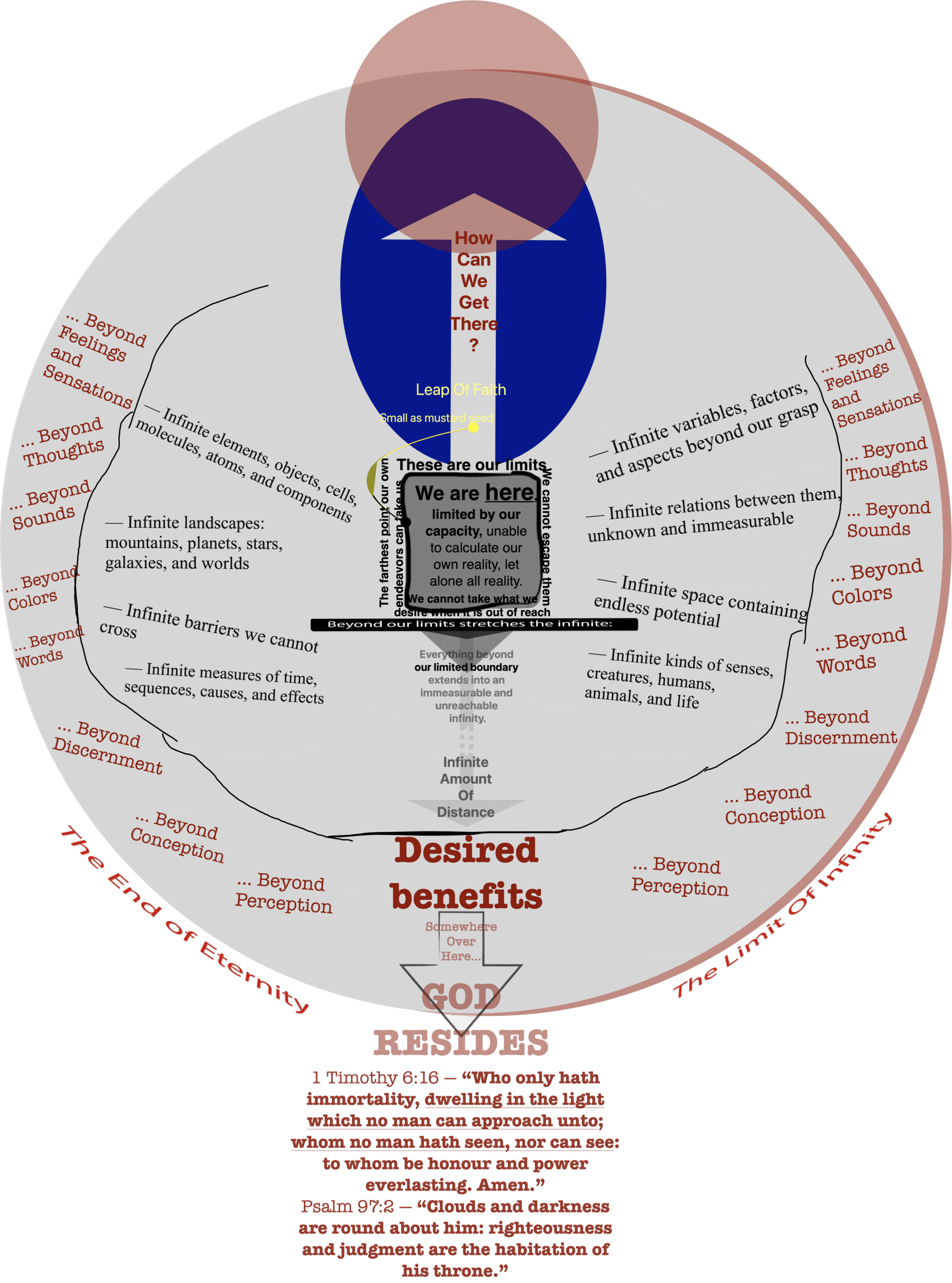
From Lamech to Jesus: the meaning of 70 times 7
From Vengeance to Mercy: A Journey Through Scripturere
🌱 1. From Creation to Lamech: The Rise of Sin and Vengeance
Genesis 1:1 — “In the beginning God created the heavens and the earth.”
Genesis 2:15 — “Then the Lord God took the man and put him in the garden of Eden to tend and keep it.”\
Genesis 2:16–17 — “And the Lord God commanded the man, saying, ‘Of every tree of the garden you may freely eat; ¹⁷but of the tree of the knowledge of good and evil you shall not eat, for in the day that you eat of it you shall surely die.'”
Genesis 3:6 — “So when the woman saw that the tree was good for food, that it was pleasant to the eyes, and a tree desirable to make one wise, she took of its fruit and ate. She also gave to her husband with her, and he ate.”
(Sin enters the world. Separation from God begins.)
Romans 5:12 — “Therefore, just as through one man sin entered the world, and death through sin, and thus death spread to all men, because all sinned.”
This was the turning point: sin entered the world through one choice, and now we all feel its echo in our hearts — a deep break we often try to fix by blaming others or protecting ourselves.
Romans 6:23 — “For the wages of sin is death, but the gift of God is eternal life in Christ Jesus our Lord.”
Genesis 3:15 — “And I will put enmity between you and the woman, and between your seed and her Seed; He shall bruise your head, and you shall bruise His heel.”
This is the first promise of a Savior — One who would crush the serpent’s head (the devil), conquer sin (the lie that we can be like gods, knowing good and evil and doing whatever we want), and rescue mankind from death and darkness (our self-righteous belief that evil must be repaid with evil).
Genesis 4:1–2 — “Now Adam knew Eve his wife, and she conceived and bore Cain…
²Then she bore again, this time his brother Abel.”Genesis 4:6-7 (NIV):
⁶ Then the Lord said to Cain, “Why are you angry? Why is your face downcast?
⁷ If you do what is right, will you not be accepted? But if you do not do what is right, sin is crouching at your door; it desires to have you, but you must rule over it.”(A moment of mercy from God. The invitation to repentance is not just for Cain but for us as well.)
God is warning Cain — not with anger, but with love. He wants to show him that sin is not just an action, but a power waiting to rule the heart. It’s the same with us.
Genesis 4:8 — “Now Cain talked with Abel his brother… Cain rose up against Abel his brother and killed him.”
(The first murder. Sin is now expressed through violence because Cain rejects God’s way which is a path of forbearance, patience, forgiveness, and bearing with those closest to us.)
How quickly rejection turns into rage. How easily the heart trades love for power, and brotherhood for blood.
Genesis 4:9-15 (NIV):
⁹ Then the Lord said to Cain, “Where is your brother Abel?”
“I don’t know,” he replied. “Am I my brother’s keeper?”
¹⁰ The Lord said, “What have you done? Listen! Your brother’s blood cries out to me from the ground.
¹¹ Now you are under a curse and driven from the ground, which opened its mouth to receive your brother’s blood from your hand.
¹² When you work the ground, it will no longer yield good crops for you. You will be a restless wanderer on the earth.”
¹³ Cain said to the Lord, “My punishment is more than I can bear.
¹⁴ Today you are driving me from the land, and I will be hidden from your presence; I will be a restless wanderer on the earth, and whoever finds me will kill me.”
¹⁵ “And the Lord said to him, ‘Not so, whoever kills Cain, vengeance shall be taken on him sevenfold.’ Then the Lord put a mark on Cain so that no one who found him would kill him.“God expelled Cain from the face of the earth, but in His mercy, He protected the sinner from being killed for the evil he committed against his brother. God placed a mark on Cain to prevent others from taking vengeance on him, offering him time to repent for his murder. This act of grace showed that God, in His mercy, forgave Cain, giving him space to repent and turn from his sin. However, the descendants of Cain exploited this divine protection, and instead of repenting, they used it as an excuse to escalate their sin, multiplying their evil rather than eliminating it. They sought immediate vengeance when wronged, yet they expected God’s protection, believing no one dared to avenge them.”
Even when Cain rebelled, God gave him time. A mark of protection instead of a sword of revenge. God’s mercy is always greater than we expect.
(Notice how Cain’s descendants pervert God’s mercy into an excuse for more violence and pride. We, too, can turn God’s grace into an excuse to keep sinning or retaliating.)
Proverbs 14:29 — “He who is slow to wrath has great understanding, but he who is impulsive exalts folly.”
Proverbs 16:32 — “He who is slow to anger is better than the mighty, and he who rules his spirit than he who takes a city.”
Genesis 4:19, 23–24 — “Then Lamech took for himself two wives…
‘Lamech said to his wives: “Adah and Zillah, hear my voice… For I have slain a man for wounding me… If Cain is avenged sevenfold, then Lamech seventy-sevenfold.”‘This is where it spirals — pride turning pain into poetry. Lamech boasts of his violence like it’s a song. This is the world without Christ: unrepentant, self-glorifying vengeance.
(Pride and revenge are now celebrated. Sin multiplies without shame.)
Psalm 10:3–4 — “For the wicked boasts of his heart’s desire…
⁴ The wicked in his proud countenance does not seek God; God is in none of his thoughts.”Genesis 6:5 — “Then the Lord saw that the wickedness of man was great in the earth, and that every intent of the thoughts of his heart was only evil continually.”
Genesis 6:7–8 — “So the Lord said, ‘I will destroy man whom I have created…’
ˆBut Noah found grace in the eyes of the Lord.”(God floods the earth but spares Noah. A line is preserved.)
Genesis 7:11–12, 17–19 (condensed):
“In the six hundredth year of Noah’s life… all the springs of the great deep burst forth, and the floodgates of the heavens were opened. Rain fell on the earth forty days and forty nights… The floodwaters rose greatly… and all the high mountains under the entire heavens were covered.”Genesis 9:1 — “So God blessed Noah and his sons, and said to them: ‘Be fruitful and multiply, and fill the earth.'”
(From Noah would come Abraham, and from Abraham, David. And from David, the promised Savior.)
Isaiah 11:1–2 — “There shall come forth a Rod from the stem of Jesse, and a Branch shall grow out of his roots.
²The Spirit of the Lord shall rest upon Him — the Spirit of wisdom and understanding, the Spirit of counsel and might, the Spirit of knowledge and of the fear of the Lord.”Micah 6:8 — “He has shown you, O man, what is good; and what does the Lord require of you
But to do justly, to love mercy, and to walk humbly with your God?”[Enrichment of Part 2 and beyond coming next if you confirm to proceed.]
✝️ 2. From Promise to Fulfillment: Jesus, the Forgiver of Sin
Isaiah 9:6 — “For unto us a Child is born, unto us a Son is given… And His name will be called Wonderful, Counselor, Mighty God, Everlasting Father, Prince of Peace.”
Matthew 1:21 — “And she will bear a Son, and you shall call His name Jesus, for He will save His people from their sins.”
Jesus didn’t come to punish sin, but to save from it. That means from guilt, yes — but also from the spirit of vengeance inside us.
Luke 2:10–11 — “Do not be afraid, for behold, I bring you good tidings of great joy… For there is born to you… a Savior, who is Christ the Lord.”
John 1:29 — “Behold! The Lamb of God who takes away the sin of the world!”
(Here we see the promise fulfilled — the Savior has come! It’s easy to take for granted, but do we truly recognize the magnitude of what Jesus did? How often do we view Him only as a distant figure instead of the very Savior who bore the weight of our sins?)
Matthew 4:17 — “From that time Jesus began to preach and to say, ‘Repent, for the kingdom of heaven is at hand.'”
Matthew 5:21–22 — “You have heard… ‘You shall not murder’…
But I say to you that whoever is angry with his brother… shall be in danger of the judgment.”(Jesus addresses the root of violence — anger. He raises the standard from actions to the heart.)
(Jesus calls us to examine not just our actions but our hearts. It’s not just about avoiding physical murder, but dealing with the anger that fuels it. How does that challenge you today? What’s beneath your anger?)
1 John 3:15 — “Whoever hates his brother is a murderer, and you know that no murderer has eternal life abiding in him.”
Matthew 5:38–42 — “You have heard… ‘An eye for an eye’…
But I tell you… Whoever slaps you on your right cheek, turn the other to him also… Walk the second mile… Give freely.”Exodus 21:24 — “Eye for eye, tooth for tooth, hand for hand, foot for foot.”
(Under the law, justice restrained vengeance. But Jesus moves beyond justice — into mercy.)
(The law aimed to limit vengeance, but Jesus calls us to a higher way. Mercy over justice. Do we find ourselves constantly looking for justice or retaliation? Can we look for ways to forgive even when we feel wronged?)
God gave justice to restrain chaos — not to justify revenge. Jesus comes to fulfill the Law by going further: love your enemy, bless those who curse you.
Proverbs 20:22 — “Do not say, ‘I will recompense evil’; wait for the Lord, and He will save you.”
Matthew 18:21–22 — “Peter said, ‘Lord, how often shall my brother sin against me, and I forgive him? Up to seven times?’
Jesus said to him, ‘I do not say to you, up to seven times, but up to seventy times seven.'”This is the reversal of Lamech. The curse is broken. Instead of multiplying violence, Jesus multiplies mercy.
(Not avenged seventy-sevenfold, but forgiven seventy times seven. A reversal of Lamech.)
(Jesus’ answer is radical! Seventy times seven doesn’t just mean a number; it represents boundless mercy. In what situations do we hold on to grudges, thinking they are justified? Jesus challenges us to release the debt.)
Isaiah 53:5 — “But He was wounded for our transgressions, He was bruised for our iniquities… And by His stripes we are healed.”
1 Peter 2:23–24 — “When He was reviled, He did not revile in return… Who Himself bore our sins in His own body on the tree.”
Luke 23:34 — “Then Jesus said, ‘Father, forgive them, for they do not know what they do.'”
This is the center of everything. Not words of judgment, but mercy — while He was still being murdered. Can we understand this love?
(He bore the ultimate violence… and answered it with forgiveness.)
(Jesus’ response to violence was forgiveness. Do we reflect that in our own lives? How can we model Jesus’ ability to forgive even when wronged?)
Romans 12:17–21 — “Repay no one evil for evil…
¹⁹ Beloved, do not avenge yourselves, but rather give place to wrath…
²¹ Do not be overcome by evil, but overcome evil with good.”Colossians 1:20 — “And by Him to reconcile all things to Himself… having made peace through the blood of His cross.”
Hebrews 12:24 — “To Jesus the Mediator of the new covenant, and to the blood of sprinkling that speaks better things than that of Abel.”
(Abel’s blood cried out for justice — Jesus’ blood cries out for mercy.)
(Abel’s blood cried out for justice — but Jesus’ blood speaks of mercy. We have been reconciled through His sacrifice. How does this impact how we approach conflict?)
✨ 3. Why Choose Wisdom? Why Flee from Darkness?
Proverbs 4:14–15 — “Do not enter the path of the wicked… Avoid it, do not travel on it; Turn away from it and pass on.”
(The path of the wicked often appears appealing, but God warns us to avoid it. What temptations or bad influences are you tempted to entertain? How can you actively choose wisdom and avoid destructive paths?)
Ephesians 5:8, 11 — “For you were once darkness, but now you are light in the Lord. Walk as children of light…
¹¹Have no fellowship with the unfruitful works of darkness, but rather expose them.”(Once in darkness, but now we are light in Christ. Does your life reflect this change? How do you interact with the world around you? Are there areas where you’re still walking in darkness rather than in light?)
You don’t have to stay in darkness. If you’ve followed vengeance, you can walk away. Jesus offers light for your next step.
1 John 1:5–7 — “God is light and in Him is no darkness at all…
⁶ If we say that we have fellowship with Him, and walk in darkness, we lie and do not practice the truth.
⁷ But if we walk in the light as He is in the light, we have fellowship with one another, and the blood of Jesus Christ His Son cleanses us.”(Walking in the light is not a mere choice; it’s a reflection of our relationship with God. Are there places in your life where you’re not practicing what you profess? How can you walk in the light more consistently?)
James 1:5 — “If any of you lacks wisdom, let him ask of God, who gives to all liberally and without reproach.”
(If we lack wisdom, we can ask God. What areas of your life do you feel uncertain about or need wisdom in? Are you seeking God’s guidance actively?)
Proverbs 9:10 — “The fear of the Lord is the beginning of wisdom, and the knowledge of the Holy One is understanding.”
(True wisdom starts with a reverence and respect for God. How does your fear of the Lord shape your decisions? Is this the foundation of your wisdom?)
True wisdom starts when we realize who God is — not a vengeful tyrant, but a holy, merciful Father.
2 Timothy 2:22 — “Flee also youthful lusts; but pursue righteousness, faith, love, peace with those who call on the Lord out of a pure heart.”
(Flee from things that lead you astray, but pursue righteousness and peace. Are there relationships or desires you need to flee from? What does pursuing peace and righteousness look like for you in practical terms?)
Romans 13:12 — “The night is far spent, the day is at hand. Therefore let us cast off the works of darkness, and let us put on the armor of light.”
(The time to choose light over darkness is now. What are some ways you can put on the armor of light today? How can you equip yourself with wisdom and righteousness for the battles ahead?)
Psalm 119:105 — “Your word is a lamp to my feet and a light to my path.”
(God’s Word is our guide in a world full of darkness. How often do you rely on His Word for direction? When you feel lost or confused, how can you use the Word as your guide?)
“From Disciples to Us: Living Mercy Today”
Matthew 6:12 — “Forgive us our debts, as we forgive our debtors.”
(The Lord’s Prayer is a constant reminder that we must forgive others, just as we ask God to forgive us. Who do you need to forgive in your life? What is stopping you from forgiving them?)
Colossians 3:12–13 — “Put on tender mercies… forgiving one another.”
(Forgiveness is a sign of growth in Christ. Are there areas where your heart is hardened? What is God calling you to do in terms of forgiveness today?)
James 2:13 — “For judgment is without mercy to the one who has shown no mercy. Mercy triumphs over judgment.”
(We will be judged with the same mercy we show others. What does this mean for you in how you view and treat others who may have hurt you?)
Hebrews 12:15 — “Looking carefully lest anyone fall short of the grace of God… and a root of bitterness springing up causes trouble.”
A final appeal: “Be a channel of Christ’s mercy in a bitter world. Don’t perpetuate Lamech’s curse. Live Jesus’ cross.”
(Bitterness can take root and affect our entire lives. Is there any unresolved bitterness in your heart? Ask God to reveal it and help you let go of it.)
(This is a call to guard our hearts against unforgiveness. Are there times when we let bitterness influence our thoughts, words, or actions? How do we uproot it by showing mercy instead?)
✨ 4. Why Do We Need Mercy Within Us? How Do We Become Like Him?
James 3:17 — “But the wisdom that is from above is first pure, then peaceable, gentle, willing to yield, full of mercy and good fruits, without partiality and without hypocrisy.”
(Wisdom from God is not proud or condemning — it is full of mercy. Does your wisdom show this mercy?)
Matthew 5:7 — “Blessed are the merciful, for they shall obtain mercy.”
(Those who give mercy will receive mercy. Who has hurt you that now deserves your mercy? What does it look like to forgive them?)
Luke 6:36–38 — “Therefore be merciful, just as your Father also is merciful.
³⁷Judge not, and you shall not be judged. Condemn not, and you shall not be condemned. Forgive, and you will be forgiven.
³⁸Give, and it will be given to you: good measure, pressed down, shaken together, and running over will be put into your bosom. For with the same measure that you use, it will be measured back to you.”(If you seek revenge, revenge will be returned to you. Because Jesus the Lord continues:)
Mark 4:24–25 — “Then He said to them, ‘Take heed what you hear. With the same measure you use, it will be measured to you; and to you who hear, more will be given.
²⁵For whoever has, to him more will be given; but whoever does not have, even what he has will be taken away from him.'”Matthew 7:1–2 — “Judge not, that you be not judged.
²For with what judgment you judge, you will be judged; and with the measure you use, it will be measured back to you.
³And why do you look at the speck in your brother’s eye, but do not consider the plank in your own eye?
⁴Or how can you say to your brother, ‘Let me remove the speck from your eye’; and look, a plank is in your own eye?
⁵Hypocrite! First remove the plank from your own eye, and then you will see clearly to remove the speck from your brother’s eye.”(God shows us how to become like Him: non-judgmental, forgiving, merciful. In what areas of your life can you strive to be more like Him?)
Micah 7:18–19 — “Who is a God like You, pardoning iniquity…
¹⁹He will again have compassion on us, and will subdue our iniquities. You will cast all our sins into the depths of the sea.”(God is a God of forgiveness. He delights in showing mercy. Have you believed that personally — not just with your mind, but with your heart? Do you let Him throw your sins into the depths?)
Psalm 103:8–12 — “The Lord is merciful and gracious…
¹⁰He has not dealt with us according to our sins…
¹¹For as the heavens are high above the earth, so great is His mercy toward those who fear Him;
¹²As far as the east is from the west, so far has He removed our transgressions from us.”(The Lord’s mercy is higher than the heavens, deeper than the sea, wider than the east is from the west.
How can you receive this mercy today — and give it? Ask yourself. Explore how. There are ways. The Lord is alive. He has not left us orphans.)Luke 15:11–24 —
¹¹Then He said: “A certain man had two sons.
¹²And the younger of them said to his father, ‘Father, give me the portion of goods that falls to me.’ So he divided to them his livelihood.
¹³And not many days after, the younger son gathered all together, journeyed to a far country, and there wasted his possessions with prodigal living.
¹⁴But when he had spent all, there arose a severe famine in that land, and he began to be in want.
¹⁵Then he went and joined himself to a citizen of that country, and he sent him into his fields to feed swine.
¹⁶And he would gladly have filled his stomach with the pods that the swine ate, and no one gave him anything.
¹⁷But when he came to himself, he said, ‘How many of my father’s hired servants have bread enough and to spare, and I perish with hunger!
¹⁸I will arise and go to my father, and will say to him, “Father, I have sinned against heaven and before you,
¹⁹and I am no longer worthy to be called your son. Make me like one of your hired servants.”’
²⁰And he arose and came to his father. But when he was still a great way off, his father saw him and had compassion, and ran and fell on his neck and kissed him.
²¹And the son said to him, ‘Father, I have sinned against heaven and in your sight, and am no longer worthy to be called your son.’
²²But the father said to his servants, ‘Bring out the best robe and put it on him, and put a ring on his hand and sandals on his feet.
²³And bring the fatted calf here and kill it, and let us eat and be merry;
²⁴for this my son was dead and is alive again; he was lost and is found.’ And they began to be merry.”(We treat the riches our Heavenly Father gave us in this life the same way the prodigal son treated his inheritance. But unlike him, many do not return home — they remain with the pigs. And many, who think they never squandered the Father’s wealth, who did everything right in their own eyes, show no love for their brother who returned from the dead. Such hearts are also far from being sons of God — for in them, there is no mercy and forgiveness, which are the key elements of self-sacrificial love which Christ showed us on the cross.)
(The parable of the prodigal son: not condemnation, but embrace. Do you believe God receives you like this when you return to Him?)
2 Corinthians 5:17–19 — “…if anyone is in Christ, he is a new creation…
¹⁸Now all things are of God, who has reconciled us to Himself through Jesus Christ, and has given us the ministry of reconciliation,
¹⁹that is, that God was in Christ reconciling the world to Himself, not imputing their trespasses to them, and has committed to us the word of reconciliation.”(God not only reconciled us, but called us to reconcile others. Who in your life needs to hear the word of reconciliation?)
Those who are forgiven are called to forgive. Those who received mercy must carry it. The mercy of Jesus is not just a gift — it is a calling.
🙏 Final Reflection
The story of humanity moved from Eden—to murder—to prideful vengeance—to the flood. But God preserved a line of mercy. From Noah to Abraham, to David, to Christ. In Jesus, we see the full answer to human violence:
He did not retaliate. He did not avenge.
He forgave. He carried our wounds. He let us strike Him.
He turned the other cheek—so we would turn our hearts.Lamech said: “I have killed… seventy-sevenfold!”
Jesus said: “Forgive… seventy times seven.”Which way leads to peace? Which voice speaks life?
Choose Jesus. Choose mercy. Choose light.
Romans 5:8 — “But God demonstrates His own love toward us, in that while we were still sinners, Christ died for us.”
(Jesus’ ultimate act of mercy was His death on the cross for us. What does His sacrifice mean for how we live our daily lives?)
Christ let us kill Him. If He avenged like Lamech seventy-sevenfold, we would all have been long ago dead. We live because He forgave seventy times seven.
The rebellion against God draws people to this:
Genesis 4:23–24 — “Then Lamech said to his wives: ‘Adah and Zillah, hear my voice; wives of Lamech, listen to my speech! For I have slain a man for wounding me, even a young man for hurting me.
²⁴If Cain is avenged sevenfold, then Lamech seventy‑sevenfold.’”Reconciliation with God, to this:
Matthew 18:21–22 — “Then Peter came to Him and said, ‘Lord, how often shall my brother sin against me, and I forgive him? Up to seven times?’
Jesus said to him, ‘I do not say to you, up to seven times, but up to seventy times seven.'”(Two ways: Lamech or Christ. One leads to destruction. The other, to mercy and life. Which path do you choose?)
One is life without Jesus, the other is life with Jesus. One life leads to endless vengeance, the other leads to boundless forgiveness through Christ.
What did Jesus do?
He took our sins upon Himself — by His wounds we are healed. He allowed Himself to suffer because of our evil deeds, so that we can see that true love receives violence but does not return violence for punishment or vengeance. Therefore He said, if someone slaps you on one cheek, turn the other also.
He took our wounds upon Himself.
Instead of beating and punishing us for our sin, we beat Him to death. He did not return death for our evil, but He took our death from us, and fastened it to Himself, so that when we killed Him, we would repent — and through that repentance, He would restore us to life.
He allowed us to kill Him, so that He could teach us not to sin. That He allowed us to kill Him — that is forgiveness. And forgiveness — it changes the heart.
Because we will say within ourselves:
“This One loves me, and I am killing Him. I should be ashamed. Let Him only be alive again, and I will kiss His feet from now on.”
And when we continue meditating on His love — God’s love, the Father’s love, infinite — we will go on like this:
“This One could have struck me back. He was stronger than I, and He did not repay me. He could have killed me, but He let me kill Him. He died because of me, in order to die for me. He made Himself a sacrifice for me, to show me that I sacrifice the One who loves me the most, who values me the most, who is the most useful to me in life. The One who gives me eternal life — He let me kill Him, so that He might return to me the life I had lost. Oh mystery of godliness!”
1 Timothy 3:16 — “And without controversy great is the mystery of godliness: God was manifest in the flesh, justified in the Spirit, seen by angels, preached among the nations, believed on in the world, received up in glory.”
(This mystery of godliness — that God took on flesh, suffered at our hands, and still loved us — is the power that transforms hearts.)
He did not return death for our evil, but He took our death from us and pressed it upon Himself, so that when we killed Him, we would repent, and through that repentance He would bring us back to life — and that life, from now on, we should live without sin, because that pleases Him.
And I live for Him now — not for myself anymore. Because I saw that He lives for me. And not only that — He died for me. And He suffered long for me. So now, I will live even longer for Him — because He did not die just to prolong my life, but to give me a new one, a life that endures through eternity and never ends.
And not only that — He gave me a reason that never runs dry for living: His love, which surpasses all knowledge.
When will I fully explore this love that surpasses knowledge? Never. Forever I will marvel at it. Forever I will worship Him with joy. I will rejoice in reverence, and honor Him in love, and love Him in trust — because He knows me, and does not abuse me, but nurtures me like a precious stone, as valuable as the apple of His eye.
Ephesians 3:18–19 —
“To comprehend with all the saints what is the width and length and depth and height —
¹⁹to know the love of Christ which passes knowledge; that you may be filled with all the fullness of God.”(Spend your life exploring this love. It is higher, deeper, wider than anything we can imagine — yet it is meant to be known, lived, and shared.)
Тој ги зеде нашите рани од нас. И наместо тој нас да нѐ истепа и казни за гревот наш, ние Него го опепавме. Не ни врати смрт за зло, туку нашата смрт тој ја зеде од нас, си ја залепи на Него, за кога ќе го убиеме, да се покаеме, и со тоа да нѐ врати во живот. Тој ни дозволи да го убиеме, за да може да нѐ научи да не грешиме. Тоа што ни дозволи да го убиеме е прошка. А прошката ни го менува срцето. Зошто ќе си речеме во себе, „Овој ме сака, а јас го убивам. Срам да ми е. Само нека е жив, и нозете ќе му ги лижам отсега.“
И кога ќе продолжеме да размислуваме на неговата љубов, Божја, Таткова, бесконечна, вака ќе продолжиме, „Овој можеше да ми врати, појак беше од мене, а не ми врати, можеше да ме убие, а ме остави да го убијам. Умре од мене, за да умре за мене. Жртва направи за мене за да ми покаже дека јас го жртувам она кое најмногу ме сака, кое најмногу ме цени, кое најмногу ми користи во животот. Оној кој ми дава живот вечен, ми дозволи да го убијам, за да ми го врати животот кој ми беше загубен. О мистеријо на боженственоста!*1 Тимотеј 3:16 — „И, без сомнение, голема е тајната на побожноста: Бог се јави во тело, се оправда во Духот, им се покажа на ангелите, се проповедаше меѓу народите, беше поверуван во светот, се вознесе во слава.“
(This mystery of godliness — that God took on flesh, suffered at our hands, and still loved us — is the power that transforms hearts.)
Не ни врати смрт за зло, туку нашата смрт тој ја зеде од нас, си ја залепи на Него, за кога ќе го убиеме, да се покаеме, и со тоа да нѐ врати во живот — и тој живот, отсега па натаму, да го живееме без грев, зошто Нему тоа Му е угодно; а јас, живем за Него, а не веќе за мене. Бидејќи видов дека Тој живее за мене. И не само тоа, туку и умре за мене. И многу долго трпеше за мене. Сега јас уште подолго ќе живеам за Него — зошто Тој не умре за да ми го продолжи животот, туку да ми даде нов, кој трае низ вечноста и не прекинува. А не само тоа, туку ми даде и неисцрпна причина да живеам — љубовта Негова која надминува знаење. Кога ќе ја доистражам таа љубов што надминува знаење? Вечно ќе се воодушевувам и ќе му се поклонувам во радост и ќе му се радувам во почит, и ќе го почитувам во љубов, и ќе го љубам во доверба. Зошто ме познава, и не ме злоупотребува, туку ме негува како драгоцен камен, кој е вреден колку зеницата на Неговото око.
Ефесјаните 3:18–19 —
„…да можете да сфатите, заедно со сите свети, што е ширината и должината, висината и длабочината,
¹⁹и да ја познаете љубовта на Христос, која ја надминува секоја познание — за да се исполниете со целата полнота Божја.“(Spend your life exploring this love. It is higher, deeper, wider than anything we can imagine — yet it is meant to be known, lived, and shared.)
Gods’ Physical Law: The Tangible Means to God’s Moral Law
- Healthful Living, p. 23
“The health reform is the right hand of the third angel’s message, and it is just as important as the message itself.” - Testimonies for the Church, Vol. 2, p. 370
“We are not to forget that the laws which govern our physical life were ordained by God, and we must obey them if we would live. - Counsels on Diet and Foods, p. 48
“Our Creator designed that the laws of health should be obeyed. The principles of health reform are as much a part of the gospel as the Ten Commandments.” - Temperance, p. 45
“We cannot be temperate in our practices and disregard the laws of health. It is a contradiction to profess to serve God and yet violate His laws that govern our physical being. - Testimonies for the Church, Vol. 1, p. 510
“If we would properly represent Christ, we must have clean habits, and we must take care of the body which is His temple.”
In a time when light has been given in abundance, it is no small thing to willfully remain in darkness. There is a class of professed Christians who walk with confidence in their moral uprightness, yet scoff at the simple, foundational laws that govern the body. They claim to uphold God’s commandments while affirming the importance of physical law with their lips, yet undermining it in their actions. They speak of health, truth, and self-control, but do not walk in it. They say, “It is important to be honest,” yet twist truth to justify themselves. They say, “It is important not to yell,” yet rebuke with raised voices. They say, “Health is vital,” yet downgrade or dismiss the very habits that sustain it. This is not ignorance, but refined hypocrisy—a form of godliness without the power. And they forget that to despise one law in practice is to trample the other in truth — because the two are not separable, disobedience of one cancels the profession of the other. They forget that to devalue one is to trample the other underfoot—for to treat one law as optional is to undermine the authority of both.
- Romans 1:21 — “Because that, when they knew God, they glorified him not as God, neither were thankful; but became vain in their imaginations, and their foolish heart was darkened.”
They call themselves wise, yet they deny the very elements by which life is sustained. They refuse sunlight. They detest pure water. They prefer suffocation in stale rooms over the invigorating air of God’s free creation. The texture of manmade cakes and burned flesh of animals is more welcome than the fruits of the garden which God made very good. And they do all this in the name of “feeling unwell.” If a person said they felt ill while breathing oxygen, we would question their sanity. Yet such statements are made by educated adults—by professionals, by parents, by members of the church—without shame. 1
- Corinthians 3:19 — “For the wisdom of this world is foolishness with God.”
What these individuals miss is not merely logic, but reverence. Reverence for the God who made man not only in soul, but in body. The health laws are not suggestions. They are divine commandments, woven into creation itself. Ellen White wrote:
- Counsels on Diet and Foods, p. 17 — “The laws of nature are the laws of God, for nature is the servant of her Creator.”
“The laws of nature are the laws of God, for nature is the servant of her Creator. In the harmony of the natural world, we are constantly reminded of the order and the law of God. The laws governing the animal kingdom and all that is created are so fixed that if they are violated, there are consequences that bring suffering and even death. It is just as important to obey the laws of God in nature as it is to obey the moral law. We are all subject to these laws, and it is essential that we yield to them for the preservation of our health.” - The Ministry of Healing, p. 235 — “A failure to care for the living machinery is an insult to the Creator.”
“The body is the most wonderful piece of machinery ever made, and it is to be cared for and kept in the best condition. The failure to care for the living machinery is an insult to the Creator. The human body was designed for efficiency, and we are to work with God’s plan to preserve our health. By improper habits, such as overeating, indulgence, and neglect of proper exercise, we dishonor God’s handiwork. God has given us clear instruction on how to care for our bodies, and neglecting that care affects both the body and the mind.” - Testimonies for the Church, Vol. 3, p. 161 — “It is as truly a sin to violate the laws of our being as to break one of the Ten Commandments.”
“It is as truly a sin to violate the laws of our being as to break one of the Ten Commandments. The body is the temple of God, and we must not allow anything to defile it. Every abuse of our health through sinful habits is an offense against the Creator. God has given us clear instructions in His Word to take care of our health, and to disregard these instructions is sin. Just as violating the moral law is sin, so is violating the physical laws that God has established.”
To claim obedience to the moral law while violating the physical law is to live in contradiction. The moral law tells you not to kill. The physical law tells you how not to kill: by breathing fresh air, drinking clean water, resting, exercising, eating that which grows from the ground. When you destroy the body by rejecting these laws, you deny the spirit of the commandment: Thou shalt not kill.
Some will say, “But I am not killing anyone.” Yet Jesus said:
- Matthew 5:21–22 — “Ye have heard that it was said… Thou shalt not kill… but I say unto you, That whosoever is angry with his brother without a cause shall be in danger of the judgment.”
Likewise, whosoever abuses their body through willful neglect is murdering slowly, and worse—setting an example for others to follow. The parent who rejects sunlight teaches their child to do the same. The professional who mocks the body’s needs lays a snare for their clients.
- Galatians 5:9 — “A little leaven leaveneth the whole lump.”
The rebellion against truth often comes clothed in softness. “I don’t feel well when I eat fruits.” “I get headaches in the sun.” “I can’t drink water—it upsets my stomach.” These statements sound harmless, but they are rooted in a deeper disease: the heart that sets up feeling above faith, emotion above obedience, self above the Word of God.
Ellen White is precise:
- Testimonies for the Church, Vol. 5, p. 443 — “The indulgence of perverted appetite is the reason why moral power is so weak.”
“The indulgence of perverted appetite is the reason why moral power is so weak in many people. Those who yield to perverse appetites weaken the will and impair the moral character. It is a law of nature that when the appetite is indulged to excess, it has a detrimental effect on the mind and character. We are to teach people that their habits of eating, drinking, and dressing are not trivial matters but have a direct influence on their spiritual and moral well-being. The indulgence of appetite is a form of self-indulgence that leads to a weakening of the spiritual power and the ability to resist temptation.”
Faith is not the acceptance of what is easy. It is the clinging to what is true when everything in your flesh rebels against it. Obedience means trusting that the law is good, even when your body says otherwise. To follow Christ means to carry a cross, not a couch.
- Romans 8:13 — “For if ye live after the flesh, ye shall die: but if ye through the Spirit do mortify the deeds of the body, ye shall live.”
To believe in the moral law while rejecting the physical law is like trusting that gravity is real, but insisting that jumping off a cliff won’t hurt you because your intentions are pure. This is not faith—it is presumption. And presumption is sin.
- The Desire of Ages, p. 126 — “Presumption is Satan’s counterfeit of faith.”
“Presumption is Satan’s counterfeit of faith. True faith in God never leads to presumption. Faith is based on trust in the promises of God and leads to obedience to His will. But presumption is an attitude that claims God’s promises without regard for obedience. Presumption places confidence in one’s own will and desires, while true faith relies on God’s will and power. The difference between true faith and presumption is that true faith works through love and obedience, while presumption disregards God’s commandments.”
It is no small sin to misuse the body, for the body is the temple of God:
- 1 Corinthians 3:16–17 — “Know ye not that ye are the temple of God…? If any man defile the temple of God, him shall God destroy.”
You cannot worship God with defiled instruments. You cannot honor God while dishonoring His creation. The air, the light, the water, the food—these are not optional. They are the channels of His sustaining grace.
When we treat the physical laws of God as optional, we do more than damage the body—we disorient the soul. What begins as physical neglect soon becomes spiritual confusion, because the channels that feed the body also stabilize the mind. When the body is neglected and the instincts are followed, the mind loosens its hold on truth. So what begins as an excuse to avoid sunlight or pure water becomes a life of bending truth, for if one ignores the created laws that sustain life, he will eventually ignore the spoken laws that define it.
To reject God’s physical law is to undermine obedience to His moral law—for the two stand together.
Ministry of Healing, p. 116
“God is the author of both the moral and the physical law; He gave both to us for our happiness and well-being.”The moral law defines what must be done; the physical law reveals how it must be done.
Education, p. 17
“The laws of health and the laws of morals are inseparablyTo claim obedience to one while dismissing the other is self-contradiction. A person who claims, “I do not lie,” while using words with vague or shifting meanings is lying in practice. For if words are not fixed, then truth cannot be spoken, nor recognized, nor defended. A man may say, “I do not kill,” while he destroys his own body with toxic substances, or leads others to do the same. But this is a form of slow murder—done in ignorance or in rebellion, yet murder still.
Ministry of Healing, p. 143
“The body is the only medium through which the mind and soul are developed for the upbuilding of character. The body must be cared for as the temple of the living God.”Likewise, to believe that gravity can kill a falling body, but refuse to act in harmony with that knowledge, is to deny the very moral impulse to preserve life. If you reject the physical means by which God sustains life, then you are also rejecting the moral duty to protect it. To give your child toxic pills in an attempt to cure a disease that emerged from violating God’s health laws is not healing—it is further rebellion, disguised as care. To claim goodness while rejecting the means of goodness is hypocrisy. To claim reverence for health while scorning the laws that preserve it is deception. And even those who acknowledge the means, but replace them with false ones, are no better off—for to use false means is to reject the true. There is one way where health flourishes, and it is God’s way: the way of pure food from the earth, fresh air, clean water, sunlight, movement, and rest. These are not just helpful. They are law.
And speech is part of the physical law, for definitions are visible, tangible, audible, smellable, tastable. formable, conceivable, understandable. When we speak without fixed definitions, we a babeling: we create confusion—like the tower of Babel, where language lost its meaning and unity collapsed. When we say the word “table” but are open for it to mean anything, then we are not delivering a meaning or value or anything practical or tangible. But when you say to a person “bring me the chair” and when that person obeys the fixed definitinos those words have, the tangible result of that obedience to that tangible definition of the request of the words will be “a chair in front of the one who requests it by his words”.
There is always a “what” that must be done—but there is also a “how” that governs its doing. The moral law tells us what is good; the physical law tells us how to do what is good. So when a person claims they have not lied, while twisting the meanings of words to suit their interests, they lie with every sentence. That is because truth does not live in feeling, or float in emotion—it stands firm in clear, fixed speech. And here lies the test: if a man is a liar, the use of fixed definitions will expose him. And that exposure will either change him or drive him to twist the truth further. When words are stable, our lives must conform to their clarity—or else our hypocrisy is laid bare. But when words are made flexible, then the sinner is never forced to face his sin. He can shift his meanings instead of surrendering his will.
If words are not treated as fixed and absolute, truth itself becomes undefined. To claim that you are not lying while redefining words by emotion or preference is not honesty—it is deception. When the meanings of words shift with impulse, truth becomes subjective, and sin becomes relative. But when definitions remain fixed, desires must bend to the truth. If they do not, a person will begin to twist language—to protect himself from the exposure of hypocrisy. He bends words instead of bending the will, reshaping vocabulary not for clarity, but for escape. A man cannot say, “I believe in honesty,” while refusing to treat words as fixed in meaning. When definitions shift with emotion or preference, truth becomes negotiable, and sin becomes a matter of opinion. The one who will not hold language to a standard will soon mold it to his desires—because fixed words would force him to face his hypocrisy, while flexible words shield him from the mirror. And when truth bends, righteousness collapses. Where there are no fixed definitions, there can be no law. And where there is no law, there can be no sin—only chaos, masked in piety.
But not all who err do so in malice. Some disobey simply because they do not know what is good. Some disobey the health or the physical law not out of rebellion, but because they do not know what health is or what the physical law requires in practice. But when truth comes, their loyalty is tested. Will they change their habits to match the truth—or twist the truth to match their habits? The one who lives by the Spirit does not cling to the habits of ignorance — who is surrendered to God will not justify old patterns. They adjust, they reform, they bend their ways to the truth—not the truth to their ways. They will say, “Now that I see, I must change.” For they do not live to preserve comfort, but to adapt to truth. And in doing so, they show that truth, not emotion, is their master. For they live not by ease, but by obedience to the Word — because to obey the truth gives the best results for them to enjoy not just for the time being, but throughout whole eternity. They invest—sacrifice—so that they reap later the fruit of their labor, just as a woman faithfully endures labor pains in hope and anticipation, knowing that she is delivering a child which will soon have all her temporary pains and sufferings swallowed by the eternal joy it brings.
And for those who were once ignorant—who simply did not know what God required—they may find it difficult at first to forsake the old ways. Their habits were long shaped by instinct and emotion, not by truth. But when the light of God’s will shines upon their path, the call is clear — they are faced with a decision: to submit, or to resist. The surrendered heart does not argue. It yields. It cries out, “Lord, You have shown me—now strengthen me to obey.” Once truth is revealed, love compels obedience. They are obliged by the Spirit they live by to reform and obey, not because they are strong, but because they have surrendered to God, trusting Him to know best and to give strength to succeed. They do not excuse disobedience, but walk forward in dependence, saying, “Lord, You have shown me—now strengthen me to obey.”
Their surrender breaks the power of emotion. They disbelieve their instincts, and walk by the Word, not by impulse. When their instincts say, “Water makes me feel sick,” or “Exposure to sunlight makes me ill,” or “I don’t like the way the texture of persimmon feels in my mouth.” they do not submit to the voice of the flesh. They answer with truth: “Get thee behind me, Satan! You do not care for the things of God, but of men. Water, sunlight, fresh air, movement, and the fruits of the ground—these are good for me. My Creator assigned them for my wellbeing. Your lies have no part in me. For I walk by faith—not the sight of my blind eyes, but the faith that sees through the eye of God.” They obey not because it is easy, but because it is right—and because He who commands also enables. To follow God is not to strive alone, but to walk with the Spirit who gives power to obey.
- Psalm 40:8 — “I delight to do thy will, O my God: yea, thy law is within my heart.”
But those who resist will always find arguments—until they are left without excuse. Their resistance is not born of reason, but rebellion.
- John 3:19–20 — “And this is the condemnation, that light is come into the world, and men loved darkness rather than light… For every one that doeth evil hateth the light.”
There is no partial obedience. God demands the whole life. To break one link is to break the chain. He who claims to keep the Sabbath but refuses the sun, He who prays for healing while rejecting God’s remedies, He who cries for peace while feeding strife to his nerves and blood—such a person is not misinformed. He is deceived.
But the deceived can be awakened. That is the mercy of God. The call is not only to health, but to holiness. The reform of the diet is not vanity—it is sanctification. The daily walk in fresh air is not legalism—it is worship.
- Romans 12:1 — “I beseech you therefore… by the mercies of God, that ye present your bodies a living sacrifice, holy, acceptable unto God.”
Let those who claim to know Christ follow Him fully—in the spirit, in the soul, and in the flesh. Let the mouth confess truth, and the body obey both the moral and physical laws of God. There is no partial obedience.
God demands the whole life — spirit, body, and will aligned — every thought, every appetite, every choice aligned with His moral and physical order.
(every thought refined, every emotion submitted, every appetite sanctified, every impulse restrained, every desire weighed, every habit surrendered, every choice made in reverence)For the day is coming when excuses will perish and only obedience will remain. And blessed are they who have walked in the light they were given.
- John 15:14 — “Ye are my friends, if ye do whatsoever I command you.”
Let the church no longer be divided between spirit and body, but whole—sanctified, sealed, and shining. And let none say they were not warned.
The Church of Christ is not composed of divided members—some obeying in part, others in full—but of one united body, wholly surrendered to both the moral and physical laws of God. Those who only imagine themselves Christians while resisting the fullness of His commandments—whether in spirit or in body—stand outside the true Body of Christ, which follows the Shepherd in everything.
Such professed believers, if they remain in this state despite of the personal calls addressed to to them to repent and turn from their sin, will share the fate not of the faithful, but of those who rejected Christ outright—because to withhold obedience is not simply to break a random command—it is to dishonor the Person who requires it, because His Law reveals His glory. His eternal worth. It is to reject the character and identity of God and of Christ, because their identity cannot be found in the mere letters J-E-S-U-S C-H-R-I-S-T, but in the trustworthiness of the Father’s law—both internal and external— which reveal His loving character. His identity is revealed not in syllables, but in steadfastness, not in profession, but in performance. Jesus obeyed both, which is what proves that in Him, He carries the name and identity of God, His Father.
Those who walk in partial obedience reveal a split allegiance. They may sing praises and speak truth with their mouths, yet in practice they betray what they claim to believe—they may pride themselves for professing reverence with the lips, but in deed they betray the truth.
- Isaiah 29:13 — “Wherefore the Lord said, Forasmuch as this people draw near me with their mouth, and with their lips do honour me, but have removed their heart far from me, and their fear toward me is taught by the precept of men.”
- Matthew 15:8 — “This people draweth nigh unto me with their mouth, and honoureth me with their lips; but their heart is far from me.”
To resist the law of God is to resist the God of the law.
And in rejecting TOTAL obedience, they reject not only one command, but the whole law — both the physical and the moral law — they reject not only the command, but the Commander. And if you reject God, will you stand next to Him on that day? And if you want to stay next to Him, will you reject ANY of His commands?- Romans 8:5–8 — “For they that are after the flesh do mind the things of the flesh; but they that are after the Spirit the things of the Spirit.
⁶ For to be carnally minded is death; but to be spiritually minded is life and peace. ⁷Because the carnal mind is enmity against God: for it is not subject to the law of God, neither indeed can be.
⁸ So then they that are in the flesh cannot please God.” - Galatians 6:7–8 — “Be not deceived; God is not mocked: for whatsoever a man soweth, that shall he also reap.
⁸ For he that soweth to his flesh shall of the flesh reap corruption; but he that soweth to the Spirit shall of the Spirit reap life everlasting.” - Ephesians 5:6-7 — “Let no man deceive you with vain words: for because of these things cometh the wrath of God upon the children of disobedience.
⁷ Be not ye therefore partakers with them.”
[Creation Context] God did not begin His law at Sinai—He began it in Eden. There He gave man a body, breath, food, and rest. These were physical laws meant to sustain the life that He declared very good. To despise them now is not merely a health issue—it is rebellion against the order of creation.
- Genesis 2:7 — “And the Lord God formed man of the dust of the ground…”
[Incarnation Fulfillment] In the life of Christ we see perfect obedience to both the moral and physical laws. He walked daily, rested properly, ate from the earth, kept the Sabbath, breathed the open air, and lived temperately. If the Son of God did not ignore the physical law, neither can His followers.
- Luke 2:52 — “And Jesus increased in wisdom and stature, and in favour with God and man.”
[Practical Examples] The neglect of physical law often hides behind modern customs: overwork, endless screen time, ignoring sleep, relying on artificial stimulants, eating what kills, fearing sunlight. These are not small compromises. They are slow departures from God’s design.
[Spiritual Law as Skeleton] The moral law is the skeleton of the soul—it gives shape and standard. The physical law is the flesh and muscle—it gives function and power. One without the other is a corpse or a ghost. Only together is there life.
[Prophetic Warning] Ellen White warns that the health message is the right arm of the gospel. To reject it is to weaken the whole body of truth. This rejection will prepare many to fall in the final crisis.
- Counsels on Health, p. 31 — “The gospel of health has able advocates, but their work has been made very hard because so many ministers, presidents of conferences, and others in positions of influence have failed to give the question of health reform its proper attention… Let the health reform be presented as the right hand of the gospel.”
- Healthful Living, p. 23